Today's
EarthStation1.com 15% (Or More!) Off Commemorative Memorial Title:
WABC Radio Airchecks MP3 Collection 1960s-1980s DVD, MP3 Download,
USB
Today, July 24, 2026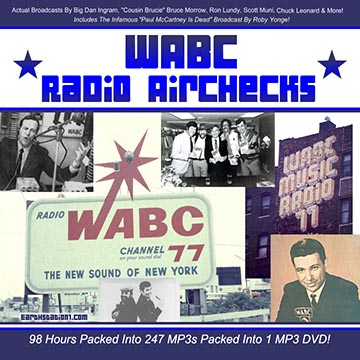
July 24: National Tequila Day: -- A day
to commemorate with a little lime and salt! Mix up a Margarita,
Paloma, or a Mamasita to celebrate the day! People have been
making Tequila for centuries, and it was once known as mezcal
wine. In fact, Tequila is mezcal, but mezcal isn't Tequila. That's
because Tequila is distilled from a specific type of agave plant.
Also, the law protects its production. Take a sip, and we'll
travel into Tequila's history. It all started around the 16th
century. Cortez arrived on the North American continent with his
Spanish conquistadors. They didn't care much for the fermented
mezcal wine served to them. However, the Spanish introduced copper
stills to the population. Enter the distilling process. Now, our
story takes us to Tequila, Jalisco, Mexico. Located in a valley
west of Guadalajara in Jalisco, Mexico, the town made a name for
themselves by distilling Blue Agave. Even though a variety of
succulents in Mexico produce mezcal, only one delivers the nectar
to distill Tequila. Blue Agave grows in the highland region.
Indeed, the unique growing conditions contribute to a larger size
and sweeter tasting agave. In contrast, agave grown in the lowland
regions taste and smell more herbal. In Mexico, the law protects
the production of Tequila. The rule states Tequila is only Tequila
if it is made within Jalisco. Additionally, the law limits
production to regions in the states of Guanajuato, Michoacan,
Nayarit, and Tamaulipas. However, the same ingredients distilled
anywhere else cannot be labeled Tequila. Interestingly, many names
in the tequila business today were the very first commercial
producers of Tequila. For example, Jose Antonio Cuervo held the
first license for making the favored beverage. He kept a
well-known company, too. Two other names include Don Cenobio Sauza
and Felix Lopez, whose businesses continue in some form today.
Equally enjoyed in cocktails such as the margarita or tequila
sunrise, connoisseurs savor a good tequila like a good whiskey. As
a result, savvy drinkers experience the smooth renaissance of
Tequila. Surprisingly, it's not the firewater they remember from
their youth. To observe National Tequila Day: While cooking up
fajitas, mix a drink for you and your friends! Try margaritas or a
new cocktail. Make a celebration out of your meal. (Remember
always to drink responsibly and never drink and drive). And join
the conversation by posting on social media using
#NationalTequilaDay! On Sale Until Midnight Tonight PT!
https://store.earthstation1.com/wabc-musicradio-shows-mp3-dvd-60s80s-am-360807775.html
Today's
EarthStation1.com 15% (Or More!) Off Commemorative Memorial Title:
TV Commercials: The Classics Vol. 5 DVD, Video Download, USB Drive
Today, July 24, 2026
July 24: National Drive-Thru Day: -- An
annual recognition of a great innovation conveniently going strong
today. The drive-thru reached its iconic zenith in the 1950s but
stayed strong through the 60s, 70s and beyond. People have enjoyed
this service since the 1930s. The ease of dropping off or picking
up an item without getting out of the car may be something we take
for granted. Of course, many studies point to the benefits and
drawbacks associated with using the drive-thru. The first and most
obvious that comes to mind is the ease of dropping off or picking
up and item. Whether its the mail, a prescription or the dry
cleaning, pulling up to a window or a slot and passing the article
through is eminently easier than even finding a parking spot.
Then, if we have children, we collect our children, our item and
wait in line. After waiting, we usually search for our parking
spot while juggling children and once again pile them back into
the car. When multiple stops are involved, repeat the previous
steps. Check the ease of use box. Secondly, many people think the
drive-thru is faster. While that might be true at some locations,
it will depend on the type of service, time of day, and where you
are located. For example, a long line in the drive-thru at the
bank may mean no waiting inside. The same may also be true at your
favorite fast-food restaurant. However, if you only need to drop
off a letter at the post office, use the drive-up option. Finally,
accuracy tops the list of some drive-thru specialists. Again, this
criteria is hit or miss. Depending on the type of business, time
of day and location, accuracy varies. Interestingly, in 2018,
Chic-fil-A mastered this arena with 97.3% accuracy. To observe
National Drive-Thru Day: Enjoy the day by using all the
drive-thrus available to you! And post on social media using
#NationalDriveThruDay to encourage others to celebrate the day
with you. America's first drive-thru burger chain, Jack in the
Box, created National Drive-Thru Day to celebrate America's love
of convenience by car. On Sale Until Midnight Tonight PT!
https://store.earthstation1.com/tv-commercials-the-classics-vol-5-dv5.html
Today's
EarthStation1.com 15% (Or More!) Off Commemorative Memorial Title:
The Patty Duke Show TV Pilot DVD, MP4 Video Download, USB Flash
Drive
Today, July 24, 2026
July 24: National Cousins Day: -- A day
to recognize the lifelong relationships that grow among cousins.
Our first friendships often form with cousins as young as infants
and endure a lifetime. Whether cousins grow up together in
close-knit families or only see each other occasionally, they
share common memories through grandparents, aunts, and uncles. At
family gatherings, cousins entertain each other and get into
trouble together, too. They celebrate birthdays and might even
blow out the other's candles to their cousin's annoyance. When
their siblings irritate them, cousins become an ally. Sometimes
cousins seem more like siblings, especially if they're only
children. As cousins grow up, watching their children grow reminds
them of their youth. And that's when the cycle begins anew. The
day celebrates every age of cousins - new baby cousins and cousins
whose babies are all grown up! Ideas to observe National Cousins
Day: gather up your cousins and take a photo. Send a text to your
cousins who are too far away; if you need to hear their voices,
give them a call; reminisce over the good times; be sure to laugh
about those things that didn't seem so funny at the time; post
photos on social media using #NationalCousinsDay! On Sale Until
Midnight Tonight PT!
https://store.earthstation1.com/the-patty-duke-show-tv-pilot-dvd.html
Today's
EarthStation1.com 15% (Or More!) Off Commemorative Memorial Title:
Vaudeville Vanities TV Show & Movie Film Set DVD, Download,
USB Drive
Today, July 24, 2026
July 24: National Tell An Old Joke Day:
-- This day is a way to keep old jokes alive and kicking! Like
every endangered species, old jokes need to be periodically
vitalized, too. Spread cheer, share laughter, and reminisce about
those old jokes everyone loves. Some people say the joke was
invented in Greece. Others even believe it originated in
mythological legend by a person called Palamedes. Since he was
also credited with inventing numbers, the alphabet, lighthouses,
dice, and the practice of eating meals at regular intervals, we
won't hesitate to adopt this particular theory as the truth. Facts
verify that the Greeks, were, in fact, a humorous lot. In the
Athens of Demosthenes, there existed a comedians' club called the
Group of Sixty. They met in the Temple of Heracles and traded
wisecracks. Apparently, Alexander the Great's father, Philip II of
Macedon, commissioned a book of their jokes. The very first joke
book ever found was also from Greece. Titled "Philogelos,"
or "Laughter-Lover," it contains 264 jokes, several of
which appear twice, in slightly different forms. Historians
suggest this means the book is actually two jokebooks combined,
given that it is attributed to two authors, Hierocles and
Philagrius. The jokes in this book are famously spare and include
gems like, "How shall I cut your hair?" a talkative
barber asked a wag. "In silence!" the wag answered. The
Ancient Romans, too, had their 'jestbooks.' The playwright Titus
Maccius Plautus often referenced these in his plays, while the
Roman historian Gaius Suetonius Tranquillus mentions a professor
of the emperor Augustus, who compiled more than 150 jokes
anthologies. "Philogelos" was misplaced during the Dark
Ages and humor was kept alive only in the Arab world. As they
spread around the world, so too did their satirical folktales and
humor. As these folktales reached Europe, they split into two:
one, the novel; the other, a shorter, more humorous anecdote. The
early Renaissance brought the joke back with the help of one man -
Poggio Bracciolini. Secretary to eight popes, this Italian
humanist was a passionate bibliophile, traveling throughout Europe
in search of lost works. This influenced his satirical writing,
which was compiled in a book called "Facetiae." Filled
with 273 jests, bons mots, puns, and humorous anecdotes, this book
was heavily influenced by another club called the Bugiale, which
functioned as a jokes club of sorts. Unfortunately, copies of
"Facetiae" are hard to come by nowadays. The first
English jestbook even had a sample of Poggio's jokes and, by the
time Shakespeare came around, jestbooks were very popular. One
more nudge was all the world needed to turn funny tales into a
joke. It came in the form of 28 jokes from "Philogelos"
being accidentally published in an edition of "Commentary on
the Golden Words of Pythagoras." This mistake meant the jokes
were soon circulated throughout Europe. Thanks to their
popularity, jokes became shorter and punchier.fThe Georgian era
brought gems like "Joe Miller's Jests" - based on a
notoriously gloomy London stage actor. Soon, by the 19th century,
joke books began to be cleaned up and ribald language was removed.
They became fillers in older forms of printed books and provided a
source of enjoyment for anyone who read them. On Sale Until
Midnight Tonight PT!
https://store.earthstation1.com/vaudeville-tv-vanities-olsen-amp-johnson-ben-blue-dual-layer-dvd.html
Today's
EarthStation1.com 15% (Or More!) Off Commemorative Memorial Title:
The Great American Road Automotive History Films MP4 Download DVD
Set
Today, July 24, 2026
July 24: The National Day Of Motoring: --
An initiative led by MINI U.S.A. to encourage the public to take
their cars on the road and explore the world. Starting in 2021,
one of the goals is to celebrate the road trip as a tradition that
has defined American culture. While the event is directed mainly
at Mini owners, it can also be celebrated by any car owner who has
a penchant for the open road and a sense of adventure. The
American road trip is ingrained in the culture. In both fact and
fiction, it has been glorified and immortalized as the best way to
see America's sights. In the United States, there are up to 4.09
million miles of road, with over 276 million registered vehicles
by 2020. It's no surprise that the country's road and motor
culture is so widespread. These characteristics prompted the
American branch of the iconic British automobile manufacturer MINI
to establish a day to commemorate a traditional American pastime.
In 2021, the first-ever National Day of Motoring was held, with
4,000 MINI owners and 100 MINI dealers from throughout the United
States participating in a statewide rally branded 'MINI Together.'
The event is organized like a scavenger hunt and is self-curated
by MINI owners who want to participate. Special tasks are assigned
via a dedicated app that promotes exercise and a virtual gathering
of MINI owners around the country. The day was enacted as a way
for MINI U.S.A. to give the American MINI community a chance to
show their stuff in a rally. 'Get lost and have fun' is the main
goal of this event as it also encourages communities to interact
with one another and strengthen community bonds. MINI has prided
itself in making cars that are 'fun to drive,' and building its
cars to fit this purpose. This appeal is what attracts interest in
the brand as data from the company shows that a customer's main
reason for buying a MINI is because it is 'fun to drive.' While
the National Day of Motoring is originally geared for MINI owners,
car owners of all kinds can be compelled to participate by taking
their cars for a spin through America's landscapes. After all,
going on the road is the best way to understand the fabric of
American culture. On Sale Until Midnight Tonight PT!
https://store.earthstation1.com/the-great-american-road-automotive-history-films-2-dvd-se2.html
Today's
EarthStation1.com 15% (Or More!) Off Commemorative Memorial Title:
The Wisdom Of The Dream: Carl Jung A Life Of Dreams DVD, Download,
USB
Today, July 24, 2026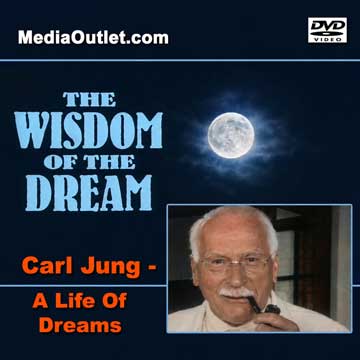
July 24: Samaritans Awareness Day/Talk To
Us Day : -- An annual campaign to underline the importance of
lending an ear to those who are going through mental health
problems. The Samaritans foundation was founded in the U.K. in
1953 by Chad Varah. He was a vicar and cartoonist who would offer
to counsel his parishioners and someone who prioritized listening
to their problems above all else. The majority of the parishioners
who came to him had suicidal thoughts as a result of various
challenges in their life. As a result of this, vicar Varah felt
compelled to do more to assist persons who are contemplating
suicide. Thus, he would establish a suicide hotline in that same
year, which would later grow into the Samaritan's foundation.
Today, Samaritans is a leading self-help foundation dedicated to
aiding depression sufferers in the U.K.. Depression is one of the
world's most severe mental disorders. Depression is expected to
affect up to 280 million individuals worldwide, with 4.5 % of
adults in the United Kingdom suffering from it. As a result,
Samaritans Awareness Day seeks to emphasize the necessity of
listening to persons who are depressed or suicidal. The reasons
for depression range widely from issues such as stress, family,
societal pressures, anxiety, loneliness, loss, and
disillusionment. Suicidal thoughts can arise when one concludes
that they are ultimately not strong enough to deal with these
problems, and therefore question their purpose of living. While
depression is often unnoticed, its effects are profound, impacting
one's capacity to function, operate, socialize, and develop. It is
still treatable, despite the fact that it is a serious and
crippling sickness. If you know someone who is depressed or has
suicidal thoughts, it is critical that you listen to them. The key
to being a good listener is to pause and consider why the
individual is having these feelings. Not interrupting their
request or pointing out errors in their explanation can help them
open up and feel heard. It's important to be nonjudgmental in your
approach. Doing so can help the person develop a sense of security
that assures them that there is somewhere or someone safe to
confide in their thoughts. On Sale Until Midnight Tonight PT!
https://store.earthstation1.com/the-wisdom-of-the-dream-carl-jung--a-life-of-dreams-dvd.html
Today's
EarthStation1.com 15% (Or More!) Off Commemorative Memorial Title:
Men In Space: From Goddard To Armstrong DVD, Video Download, USB
Drive
Today, July 24, 2026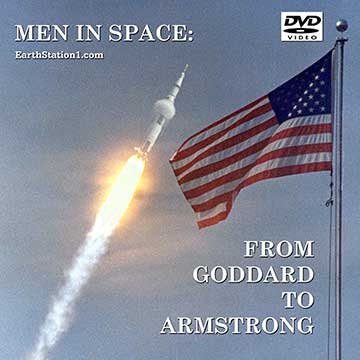
July 24, 1950: The History Of Rocketry:
The History Of Spaceflight: The Aftermath Of World War II: The
Cold War: The Cold War (1947-1953): Space Agencies Of The United
States: The United States Air Force (USAF): Grand Openings: Rocket
Launches: Cape Canaveral Space Force Station: -- Cape Canaveral
Air Force Station begins operations by opening a new chapter in
space flight with the launch of the first rocket from Cape
Canaveral in Brevard County, Florida: the Bumper 8, an ambitious
two-stage RTV-G-4 Bumper sounding rocket program that topped a
German V-2 liquid-fueled ballistic missile with an American WAC
Corporal, America's first sounding rocket, a progam used to study
problems pertaining to two-stage high-speed rockets. The upper
stage was able to reach then-record altitudes of almost 400
kilometers (248.5 miles), higher even than some Space Shuttles
flew many years later. Launched under the direction of the General
Electric Company, the Bumper Project was used primarily for
testing rocket systems and for research on the upper atmosphere.
Bumper rockets carried small payloads that allowed them to measure
attributes including air temperature and cosmic ray impacts; seven
years later, the Soviet Union launched Sputnik I and Sputnik II,
and though they were the first satellites to go into Earth orbit,
the Bumper 8 sent back back to earth much the same scientific data
from space that the Sputniks did, and did so seven years earlier
than they did. The Cape Canaveral Air Force Station (CCAFS) was
known as Cape Kennedy Air Force Station (CKAFS) from 1964 to 1974,
and reverted to the name Cape Canaveral Air Force Station in 1974.
The facility was renamed Cape Canaveral Space Force Station
(CCSFS) on December 9, 2020. The Cape Canaveral Air Force Station
had been used by the United States government to test missiles
since 1949, when President Harry S. Truman established the Joint
Long Range Proving Ground at Cape Canaveral. The location was
among the best in the continental United States for this purpose,
as it allowed for launches out over the Atlantic Ocean, and is
closer to the equator than most other parts of the United States,
allowing rockets to get a boost from the Earth's rotation. A
number of American space exploration pioneers were launched from
CCAFS, including the first U.S. Earth satellite (1958), first U.S.
astronaut (1961), first U.S. astronaut in orbit (1962), first
two-man U.S. spacecraft (1965), first U.S. unmanned lunar landing
(1966), and first three-man U.S. spacecraft (1968). It was also
the launch site for all of the first spacecraft to (separately)
fly past each of the planets in the Solar System (1962-1977), the
first spacecraft to orbit Mars (1971) and roam its surface (1996),
the first American spacecraft to orbit and land on Venus (1978),
the first spacecraft to orbit Saturn (2004), and to orbit Mercury
(2011), and the first spacecraft to leave the Solar System (1977).
Portions of the base have been designated a National Historic
Landmark for their association with the early years of the
American space program. On Sale Until Midnight Tonight PT!
https://store.earthstation1.com/men-in-space-from-goddard-to-armstrong-dvd-video-download-usb-drive.html
Today's
EarthStation1.com 15% (Or More!) Off Commemorative Memorial Title:
Apollo 11: Flight To The Moon With Wally Schirra CD, MP3 Download,
USB
Today, July 24, 2026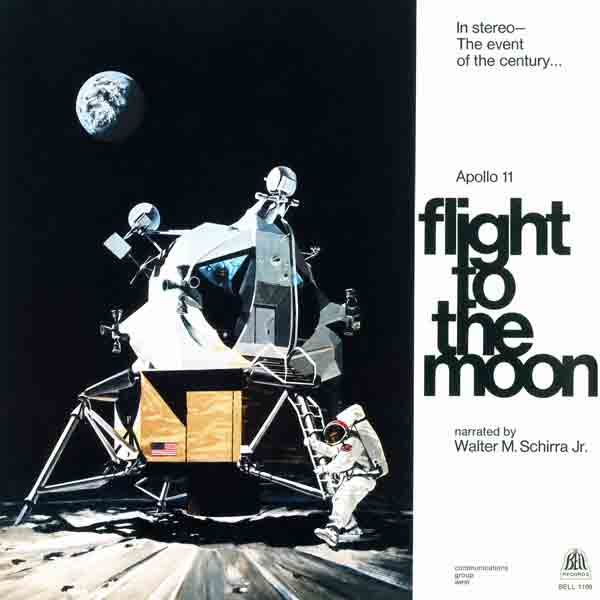
July 24, 1969: Outer Space Firsts:
Splashdowns: The History Of Rocketry: The History Of Spaceflight:
The Aftermath Of World War II: The Cold War: The Space Age: The
Space Race: Space Programs Of The United States: Human Spaceflight
Programs: The Discovery And Exploration Of The Solar System:
Missions To The Moon: Project Apollo: Apollo 11 (AS-11): -- Apollo
11 splashes down safely in the Pacific Ocean after having returned
from the first manned landing mission to the Moon. On July 21,
1969 at 02:56 UTC, astronaut Neil Armstrong became the first
person to walk on the Moon. The evening prior, on July 20, 1969,
the Apollo 11 lunar lander Eagle made the first manned landing on
the Moon in the Sea of Tranquility. Within hours, astronauts Neil
Armstrong and Buzz Aldrin became the first humans to walk on the
Moon on July 21 UTC. On July 16, 1969, the mission began with
liftoff from Kennedy Space Center at 9:37 a.m. Apollo 11 was the
spaceflight that landed the first two people on the Moon. Mission
commander Neil Armstrong and pilot Buzz Aldrin, both American,
landed the lunar module Eagle on July 20, 1969, at 20:17 UTC.
Armstrong became the first person to step onto the lunar surface
six hours after landing on July 21 at 02:56:15 UTC; Aldrin joined
him about 20 minutes later. They spent about two and a quarter
hours together outside the spacecraft, and collected 47.5 pounds
(21.5 kg) of lunar material to bring back to Earth. Michael
Collins piloted the command module Columbia alone in lunar orbit
while they were on the Moon's surface. Armstrong and Aldrin spent
21.5 hours on the lunar surface before rejoining Columbia in lunar
orbit. Apollo 11 was launched by a Saturn V rocket from Kennedy
Space Center on Merritt Island, Florida, on July 16 at 9:32 am EDT
(13:32 UTC) and was the fifth manned mission of NASA's Apollo
program. The Apollo spacecraft had three parts: a command module
(CM) with a cabin for the three astronauts, and the only part that
returned to Earth; a service module (SM), which supported the
command module with propulsion, electrical power, oxygen, and
water; and a lunar module (LM) that had two stages - a descent
stage for landing on the Moon, and an ascent stage to place the
astronauts back into lunar orbit. After being sent to the Moon by
the Saturn V's third stage, the astronauts separated the
spacecraft from it and traveled for three days until they entered
into lunar orbit. Armstrong and Aldrin then moved into the lunar
module Eagle and landed in the Sea of Tranquility. The astronauts
used Eagle's upper stage to lift off from the lunar surface and
rejoin Collins in the command module. They jettisoned Eagle before
they performed the maneuvers that blasted them out of lunar orbit
on a trajectory back to Earth. They returned to Earth and splashed
down in the Pacific Ocean on July 24 after more than eight days in
space. The landing was broadcast on live TV to a worldwide
audience. Armstrong stepped onto the lunar surface and described
the event as "one small step for [a] man, one giant leap for
mankind." Apollo 11 was the beginning of the end of the Space
Race (Apollo-Soyuz was the end effectively) and fulfilled a
national goal proposed in 1961 by U.S. President John F. Kennedy:
"before this decade is out, of landing a man on the Moon and
returning him safely to the Earth." On Sale Until Midnight
Tonight PT!
https://store.earthstation1.com/apollo-11-flight-to-the-moon-by-walter-m-schirra-jr-mp3113.html
Today's
EarthStation1.com 15% (Or More!) Off Commemorative Memorial Title:
TV Music & Dance Shows #2 Bandstand Action DVD, Download,
Flash Drive
Today, July 24, 2026
July 24, 1701: The United States: The
History Of The United States: The Territorial Expansion Of The
United States (The Territorial Evolution Of The United States):
The Founding Of Fort Pontchartrain (The Founding Of Detroit): --
Antoine de la Mothe Cadillac founds the trading post at Fort
Pontchartrain, which later becomes the city of Detroit. Upon his
arrival in North America, La Mothe adopted his title after the
town of Cadillac in southwestern France. The city he helped found,
Detroit, became the world center of automobile production in the
20th century. William H. Murphy and Henry M. Leland, founders of
the Cadillac auto company from the remnants of the Henry Ford
Company in 1902, paid homage to him by using his name for their
company and his armorial bearings as its logo in 1902. On Sale
Until Midnight Tonight PT!
https://store.earthstation1.com/classic-tv-music-amp-dance-shows-2-where-bandstand-action-is-dv2.html
Today's
EarthStation1.com 15% (Or More!) Off Commemorative Memorial Title:
The Armenian Genocide Documentary MP4 Video Download DVD
Today, July 24, 2026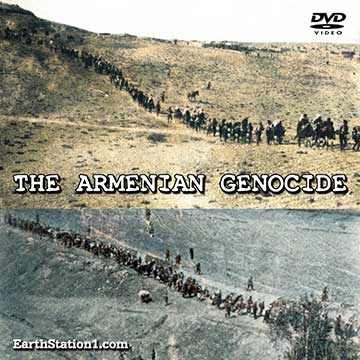
July 24, 1923: The European Civil War:
World War I: The First European War (The European Theater Of World
War I): The Aftermath Of World War I: 20th Century Revolutions:
The Revolutions Of 1917-1923: The Turkish War Of Independence: The
Treaty Of Lausanne (The Treaty Of Peace And Exchange Of War
Prisoners With Turkey Signed At Lausanne): The Armenian National
Movement: The Hamidian Genocides (The Armenian Genocides): The
Armenian Genocide: Aftermath Of The Armenian Genocide: -- The
Turkish War Of Independence ends with the signing of the Treaty Of
Lausanne peace treaty in The Palais de Rumine in Lausanne,
Switzerland, negotiated during the Lausanne Conference of 1922-23;
its declaration of amnesty granted immunity for crimes committed
between 1914 and 1922, most notably the crime of The Armenian
Genocide, effectively endorsing the ethnic cleansing committed by
the Turks during this period. The treaty officially settled the
conflict that had originally existed between the Ottoman Empire
and the Allied French Republic, British Empire, Kingdom of Italy,
Empire of Japan, Kingdom of Greece, Kingdom of Serbia, and the
Kingdom of Romania since the onset of World War I. The original
text of the treaty is in French. It was the result of a second
attempt at peace after the failed and unratified Treaty Of Sevres,
which aimed to divide Ottoman territories. The earlier treaty had
been signed in 1920, but later rejected by the Turkish National
Movement who fought against its terms. As a result of the
Greco-Turkish War, Izmir was retrieved and the Armistice of
Mudanya was signed in October 1922. It provided for the
Greek-Turkish population exchange and allowed unrestricted
civilian, non-military, passage through the Turkish Straits. The
treaty was ratified by Turkey on August 23, 1923, and all of the
other signatories by July 16, 1924. It came into force on August
6, 1924, when the instruments of ratification were officially
deposited in Paris. A declaration of amnesty granted immunity for
crimes committed between 1914 and 1922, notably the Armenian
genocide. Historian Hans-Lukas Kieser states, "Lausanne
tacitly endorsed comprehensive policies of expulsion and
extermination of hetero-ethnic and hetero-religious groups".
The war effectively ended with the recapture of Izmir and the
Chanak Crisis, prompting the signing of another armistice in
Mudanya. The Grand National Assembly in Ankara was recognized as
the legitimate Turkish government, which signed the Treaty of
Lausanne (July 1923), a treaty more favorable to Turkey than the
Sevres Treaty. The Allies evacuated Anatolia and Eastern Thrace,
the Ottoman government was overthrown and the monarchy abolished,
and the Grand National Assembly of Turkey (which remains Turkey's
primary legislative body today) declared the Republic of Turkey on
October 29, 1923. With the war, a population exchange between
Greece and Turkey, the partitioning of the Ottoman Empire, and the
abolition of the sultanate, the Ottoman era came to an end, and
with Ataturk's reforms, the Turks created the modern, secular
nation-state of Turkey. On March 3, 1924, the Ottoman caliphate
was also abolished. The Turkish War Of Independence (May 15, 1919
- July 24, 1923) was a series of military campaigns and a
revolution waged by the Turkish National Movement, after the
Ottoman Empire was occupied and partitioned following its defeat
in World War I. The conflict was between the Turkish Nationalists
against Allied and separatist forces over the application of
Wilsonian principles, especially self-determination, in post-World
War I Anatolia and eastern Thrace. The revolution concluded the
collapse of the Ottoman Empire and the Eastern question, ending
the Ottoman sultanate and the Ottoman caliphate, and establishing
the Republic of Turkey. This resulted in the transfer of
sovereignty from the sultan-caliph to the nation, setting the
stage for nationalist revolutionary reform in Republican Turkey.
On Sale Until Midnight Tonight PT!
https://store.earthstation1.com/the-armenian-genocide-documentary-mp4-video-download-dvd.html
Today's
EarthStation1.com 15% (Or More!) Off Commemorative Memorial Title:
The Western Tradition TV Series DVD, MP4 Video Download, USB Drive
Today, July 24, 2026
July 24, 1802: #BOTD: #HBD! Alexandre
Dumas, African French novelist, playwright and Freemason (d.
December 5, 1870) is #born Dumas Davy De La Pailleterie in
Villers-Cotterets in the department of Aisne, in Picardy, France.
Also known as Alexandre Dumas Pere (French: "father"),
his works have been translated into many languages, and he is one
of the most widely read French authors. Many of his historical
novels of high adventure were originally published as serials,
including The Count of Monte Cristo, The Three Musketeers, Twenty
Years After, and The Vicomte de Bragelonne: Ten Years Later. His
novels have been adapted since the early twentieth century for
nearly 200 films. Dumas' last novel, The Knight of Sainte-Hermine,
unfinished at his death, was completed by scholar Claude Schopp
and published in 2005. It was published in English in 2008 as The
Last Cavalier. Prolific in several genres, Dumas began his career
by writing plays, which were successfully produced from the first.
He also wrote numerous magazine articles and travel books; his
published works totalled 100,000 pages. In the 1840s, Dumas
founded the Theatre Historique in Paris. His father, General
Thomas-Alexandre Davy de la Pailleterie, was born in the French
colony of Saint-Domingue (present-day Haiti) to Alexandre Antoine
Davy de la Pailleterie, a French nobleman, and Marie-Cessette
Dumas, a slave of African descent. At age 14 Thomas-Alexandre was
taken by his father to France, where he was educated in a military
academy and entered the military for what became an illustrious
career. Dumas' father's aristocratic rank helped young Alexandre
acquire work with Louis-Philippe, Duke of Orleans. He later began
working as a writer, finding early success. Decades later, in the
election of Louis-Napoleon Bonaparte in 1851, Dumas fell from
favour and left France for Belgium, where he stayed for several
years. Upon leaving Belgium, Dumas moved to Russia for a few years
before going to Italy. In 1861, he founded and published the
newspaper L'Indipendente, which supported the Italian unification
effort. In 1864, he returned to Paris. Though married, in the
tradition of Frenchmen of higher social class, Dumas had numerous
affairs (allegedly as many as forty). In his lifetime, he was
known to have at least four illegitimate children; although
twentieth-century scholars found that Dumas fathered another three
other children out of wedlock. He acknowledged and assisted his
son, Alexandre Dumas, to become a successful novelist and
playwright. They are known as Alexandre Dumas pere ('father') and
Alexandre Dumas fils ('son'). Among his affairs, in 1866, Dumas
had one with Adah Isaacs Menken, an American actress then less
than half his age and at the height of her career. The English
playwright Watts Phillips, who knew Dumas in his later life,
described him as "the most generous, large-hearted being in
the world. He also was the most delightfully amusing and
egotistical creature on the face of the earth. His tongue was like
a windmill - once set in motion, you never knew when he would
stop, especially if the theme was himself.". Dumas is
included in the 2002 book by Joseph Cox, Great Black Men of
Masonry. Despite Alexandre Dumas' success, despite his Freemasonry
and aristocratic connections, his being of mixed-race would affect
him all his life. In 1843 he wrote a short novel, Georges, that
addressed some of the issues of race and the effects of
colonialism. He once remarked to a man who insulted him about his
mixed-race background: "My father was a mulatto, my
grandfather was a Negro, and my great grandfather a monkey. You
see, Sir, my family starts where yours ends.". Dumas added
Masonic clues in his stories; The Three Musketeers is based on
Masonic principles of the Enlightenment. Freemasonry is also
subtly written about by Freemason Brother Alexandre Dumas
elsewhere; for example, in "The Count of Monte Cristo":
"Edmond had become as skilled in navigating the coastal
waters as he had once been on the open sea. He got to know all the
smugglers around the Mediterranean and learned the Masonic signs
that these semi-pirates used to recognize one another."
(Chap. xxii, p. 189.); "But Andrea, turning around towards
them, winked, put his tongue in his cheek and gave a clicking of
the lips that meant a host of things to these bandits, who fell
silent. These were masonic signs that Caderousse had shown him,
and the hooligans recognized one of their own." (Chap. cvii,
p. 994.); "'More or less. We sailors are like freemasons, we
recognize one another by certain signs.'" (Chap. xxxi, p.
266. Penguin Classics Edition). Also in "The Countess de
Charny", a chapter describes the advancement of three
freemasons into the Illuminati of Cagliostro. ([AQC xciii 4]
Philadelphia : T. B. Peterson, [1858.]) Alexandre Dumas died in
Puys, France at the age of 68 of a paralytic seizure. He was
originally buried at Neuville-Les-Dieppe in Normandy, France; his
body was then transferred to town of his birth, Villers-Cotterets,
on April 15, 1872 (a town notable as the signing-place in 1539 of
The Ordinance Of Villers-Cotterets, which discontinued the use of
Latin in official French documents), ultimately to be buried on
November 30, 1872 at The Pantheon in Paris, France, next to Victor
Hugo. On Sale Until Midnight Tonight PT!
https://store.earthstation1.com/the-western-tradition-dvd-set-all-52-shows-13-d5213.html
Today's
EarthStation1.com 15% (Or More!) Off Commemorative Memorial Title:
Television: A History Of Broadcast TV DVD MP4 Download USB Drive
Today, July 24, 2026
July 24, 1895: #BOTD: #HBD! Robert
Graves, English poet, historical novelist, critic, classicist and
magician (d. December 7, 1985) is #born Robert Von Ranke Graves
into a middle-class family in Wimbledon, then part of Surrey, now
part of south London. His father was Alfred Perceval Graves, a
celebrated Irish poet and figure in the Gaelic revival; they were
both Celticists and students of Irish mythology. Graves produced
more than 140 works. Graves's poems-together with his translations
and innovative analysis and interpretations of the Greek myths;
his memoir of his early life, including his role in World War I,
Good-Bye to All That; and his speculative study of poetic
inspiration, The White Goddess-have never been out of print. He
earned his living from writing, particularly popular historical
novels such as I, Claudius, King Jesus, The Golden Fleece and
Count Belisarius. He also was a prominent translator of Classical
Latin and Ancient Greek texts; his versions of The Twelve Caesars
and The Golden Ass remain popular, for their clarity and
entertaining style. Graves was awarded the 1934 James Tait Black
Memorial Prize for both I, Claudius and Claudius the God. Later,
in the 1970s, the Claudius books were turned into the very popular
star-studded television series I, Claudius, starring Sir Derek
Jacobi as Claudius, which was shown many times over many years in
reruns both in Britain and on public television in the United
States. During the early 1970s, Graves began to experience
increasingly severe memory loss. By his 80th birthday in 1975, he
had come to the end of his working life. He lived for another
decade, in an increasingly dependent condition, and had taken a
vow of silence before dying of heart failure at the age of 90
years. His body was buried the next morning in the small
churchyard on a hill at Deia, a small coastal village in the Serra
de Tramuntana which forms the northern ridge of the Spanish island
of Mallorca, Spain, at the site of a shrine that had once been
sacred to the White Goddess of Pelion His second wife, Beryl
Graves, died on October 27, 2003 and her body was interred in the
same grave. On Sale Until Midnight Tonight PT!
https://store.earthstation1.com/television-1988-tv-documentary-series-8-shows-4-dual-laye198884.html
Today's
EarthStation1.com 15% (Or More!) Off Commemorative Memorial Title:
Propaganda Posters JPG Photo + MPG Video DVD-ROM, Download, USB
Stick
Today, July 24, 2026
July 24, 1860: #BOTD: #HBD! Alphonse
Mucha, internationally renowned Czech painter, illustrator,
graphic artist and Freemason, living in Paris during the Art
Nouveau period, widely known for his distinctly stylized and
decorative theatrical posters, particularly those of Sarah
Bernhardt (d. July 14, 1939) is #born Alfons Maria Mucha in in the
small town of Ivancice in the southern Moravian region of
Margraviate of Moravia, Austrian Empire (modern Czech republic).
He produced illustrations, advertisements, decorative panels, as
well as designs, which became among the best-known images of the
period. In the second part of his career, at the age of 57, he
returned to his homeland and devoted himself to a series of twenty
monumental symbolist canvases known as The Slav Epic, depicting
the history of all the Slavic peoples of the world, which he
painted between 1912 and 1926. In 1928, on the 10th anniversary of
the independence of Czechoslovakia, he presented the series to the
Czech nation. He considered it his most important work. Alphonse
Mucha died of pneumonia in Prague, Protectorate of Bohemia and
Moravia, 10 days short of his 79th birthday and over a month
before the outbreak of the Second World War. Mucha's role as a
Slav nationalist and Freemason made him a prime target of the
Nazis, who on March 15, 1939, by order of Adolf Hitler, absorbed
Czechoslovakia into German Reich as the Protectorate of Bohemia
and Moravia. Mucha was arrested by the Nazis, interrogated for
several days, and released. By then the old man's health was
broken, leading to his contracting pneumonia and his death. Though
public gatherings were banned, a huge crowd attended his interment
in the Slavin Monument of Vysehrad cemetery, reserved for notable
figures in Czech culture. On Sale Until Midnight Tonight PT!
https://store.earthstation1.com/propaganda-posters-cd-jpg-images.html
Today's
EarthStation1.com 15% (Or More!) Off Commemorative Memorial Title:
Machu Picchu's Rediscovery By Hiram Bingham III MP4 Video Download
DVD
Today, July 24, 2026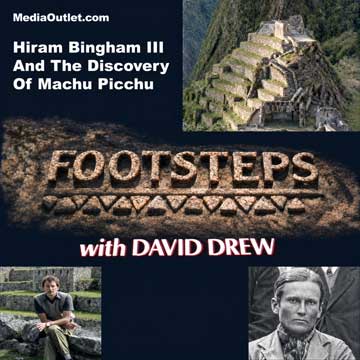
July 24, 1911: Archaelogy (Archeology):
Great Discoveries Of Archaeology: Exploration: The Exploration Of
The Americas: The Exploration Of South America: The Inca Empire
(The Realm Of The Four Parts [Quechua: Tawantinsuyu]): UNESCO
World Heritage Sites (World Heritage Sites): UNESCO World Heritage
Sites In Peru (World Heritage Sites In Peru): Machu Picchu: --
Hiram Bingham III re-discovers Machu Picchu, "The Lost City
Of The Incas". Machu Picchu is a 15th-century Inca citadel
situated on a mountain ridge 2,430 metres (7,970 ft) above sea
level. It is located in the Cusco Region, Urubamba Province,
Machupicchu District in Peru, above the Sacred Valley, which is 80
kilometres (50 mi) northwest of Cuzco and through which the
Urubamba River flows. Most archaeologists believe that Machu
Picchu was constructed as an estate for the Inca emperor Pachacuti
(1438-1472). Often mistakenly referred to as the "Lost City
of the Incas" (a title more accurately applied to
Vilcabamba), it is the most familiar icon of Inca civilization.
The Incas built the estate around 1450 but abandoned it a century
later at the time of the Spanish Conquest. Although known locally,
it was not known to the Spanish during the colonial period and
remained unknown to the outside world until the American historian
explorer Hiram Bingham rediscovered it and brought it to
international attention after his successful expedition Yale
Peruvian Expedition of 1911. Machu Picchu was built in the
classical Inca style, with polished dry-stone walls. Its three
primary structures are the Intihuatana, the Temple of the Sun, and
the Room of the Three Windows. Most of the outlying buildings have
been reconstructed in order to give tourists a better idea of how
they originally appeared. By 1976, thirty percent of Machu Picchu
had been restored and restoration continues. Machu Picchu was
declared a Peruvian Historic Sanctuary in 1981 and a UNESCO World
Heritage Site in 1983. In 2007, Machu Picchu was voted one of the
New Seven Wonders of the World in a worldwide Internet poll. On
Sale Until Midnight Tonight PT!
https://store.earthstation1.com/footsteps-machu-picchu-and-hiram-bingham-iii-dvd.html
Today's
EarthStation1.com 15% (Or More!) Off Commemorative Memorial Title:
Richard Nixon MP3s Collection CD, MP3 Audio Download, USB Flash
Drive
Today, July 24, 2026
July 24, 1959: The Aftermath Of World War
II: The Cold War: The Cold War (1953-1962): The American National
Exhibition: The Kitchen Debate: -- At the opening of the American
National Exhibition in Moscow, U.S. Vice President Richard Nixon
and Soviet Premier Nikita Khrushchev have a "Kitchen Debate".
The Kitchen Debate was a series of impromptu exchanges (through
interpreters) between then U.S. Vice President Richard Nixon and
Soviet Premier Nikita Khrushchev at the opening of the American
National Exhibition at Sokolniki Park in Moscow on July 24, 1959.
For the exhibition, an entire house was built that the American
exhibitors claimed anyone in America could afford. It was filled
with labor-saving and recreational devices meant to represent the
fruits of the capitalist American consumer market. The debate was
recorded on color videotape and Nixon made reference to this fact;
it was subsequently rebroadcast in both countries. The American
National Exhibition was sponsored by the American government, and
it followed a similar Soviet Exhibit in New York City earlier that
year. It featured many displays of the latest "home
appliances, fashions, television and hi-fi sets, a model house
priced to sell [to] an 'average' family, farm equipment, 1959
automobiles, boats, sporting equipment and a children's
playground, as well as books and vinyl records, this exhibit was
intended to narrow the gap between the Americans and the Soviets
and improve the political relations between them. However, the
"exhibition was also a tool of cultural diplomacy against the
Soviet Communist Regime" as the American politicians wanted
to demonstrate the advantages of capitalism to the Soviets. This
is evident in Vice President Richard Nixon's speech on the opening
night of the Exhibition on July 24, 1959 as he congratulated
USSR's Premier Nikita Khrushchev and the Soviets on their advances
in astronomy and rocket science, but quickly returned to focus on
the United States' strong points, especially the concept of
freedom. On Sale Until Midnight Tonight PT!
https://store.earthstation1.com/richard-nixon-mp3s-collection-as-mp3-cd-download-usb-dri33.html
Today's
EarthStation1.com 15% (Or More!) Off Commemorative Memorial Title:
National Lampoon: The Missing White House Tapes LP MP3 CD Download
USB
Today, July 24, 2026
July 24, 1974: Scandals: Political
Scandals: Political Scandals Of The United States: Richard Nixon:
The Presidency Of Richard Nixon: The Watergate Scandal: The Nixon
White House Tapes: United States v. Nixon: -- The United States
Supreme Court unanimously ruled in a landmark case that President
Richard Nixon did not have the authority to withhold subpoenaed
White House tapes and other subpoenaed materials and they order
him to surrender the tapes and other subpoenaed materials to a
federal district to the Watergate special prosecutor Archibald Cox
who had issued the subpoenas. United States v. Nixon, 418 U.S. 683
(1974), was important to the late stages of the Watergate scandal,
when there was an ongoing impeachment process against Richard
Nixon. United States v. Nixon is considered a crucial precedent
limiting the power of any U.S. president to claim executive
privilege. Chief Justice Warren E. Burger wrote the opinion for a
unanimous court, joined by Justices William O. Douglas, William J.
Brennan, Potter Stewart, Byron White, Thurgood Marshall, Harry
Blackmun and Lewis F. Powell. Burger, Blackmun and Powell were
appointed to the Court by Nixon during his first term. Associate
Justice William Rehnquist recused himself as he had previously
served in the Nixon administration as an Assistant Attorney
General. On Sale Until Midnight Tonight PT!
https://store.earthstation1.com/national-lampoon-missing-white-house-tapes-1974-lp-m19743.html
Today's
EarthStation1.com 15% (Or More!) Off Commemorative Memorial Title:
Combat America (1945) Clark Cable + Bonus B-17 Doc DVD, MP4, USB
Drive
Today, July 24, 2026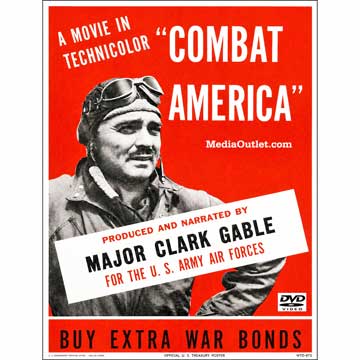
July 24, 1943: The European Civil War:
World War II: The Second European War (The European Theater Of
World War II): The Western Front Of World War II: Aviation:
Military Aviation: Air Warfare Of World War II: Strategic Bombing
During World War II: European Air Operations During The Battle Of
Europe: RAF Strategic Bombing During The Second World War: USAAF
Strategic Bombing During The Second World War: The Bombing Of
Hamburg In World War II: The Battle Of Hamburg: Operation
Gomorrah: -- During World War II in Europe, the Royal Air Force
begins Operation Gomorrah, the systematic raiding Hamburg during
the last week of July 1943, while tossing bales of aluminum foil
strips overboard to cause German radar screens to see a blizzard
of false echoes. As a result, only twelve of 791 Allied bombers
involved were shot down. As part of a sustained campaign of
strategic bombing during World War II, Operation Gomorrah created
one of the largest firestorms raised by the Royal Air Force and
United States Army Air Forces in World War II, killing an
estimated 58,000 civilians and wounding 180,000 more in Hamburg,
and virtually destroying most of the city. Before the development
of the firestorm in Hamburg, there had been no rain for some time
and everything was very dry. The unusually warm weather and good
conditions meant that the bombing was highly concentrated around
the intended targets and also created a vortex and whirling
updraft of super-heated air which created a 460 meter high tornado
of fire. Various other previously used techniques and devices were
instrumental as well, such as area bombing, Pathfinders, and H2S
radar, which came together to work with particular effectiveness.
An early form of chaff, code named 'Window', was successfully used
for the first time by the RAF - clouds of tinfoil strips dropped
by Pathfinders as well as the initial bomber stream - in order to
completely cloud German radar. The raids inflicted severe damage
to German armaments production in Hamburg. The Allied bombing of
Hamburg during World War II included numerous attacks on civilians
and civic infrastructure. As a large city and industrial centre,
Hamburg's shipyards, U-boat pens, and the Hamburg-Harburg area oil
refineries were attacked throughout the war. On Sale Until
Midnight Tonight PT!
https://store.earthstation1.com/combat-america-1945-clark-gable-8th-usaaf-wwi19458.html
Today's
EarthStation1.com 15% (Or More!) Off Commemorative Memorial Title:
De Gaulle And France TV Series DVD, Video Download, USB Flash
Drive
Today, July 24, 2026
July 24, 1967: France: The History Of
France: The Modern History Of France: The Presidency Of Charles De
Gaulle: Canada-France relations" International incidents:
Speeches by Charles de Gaulle: The Quebec sovereignty movement:
The Vive Le Quebec Libre Speech: -- During an official state visit
to Canada under the pretext of attending Expo 67 in Montreal,
Quebec, French President Charles de Gaulle ridiculously declares
to a crowd of over 100,000 in Montreal the phrase "Vive le
Quebec libre!" ("Long live free Quebec!"); the
statement angered the Canadian government and many Anglophone
Canadians. The phrase, a slogan used by Quebecers who favoured
Quebec sovereignty, and de Gaulle's use of it was seen by them as
giving his support to the movement. The speech sparked a
diplomatic incident with Canada's government, and was condemned by
Prime Minister Lester B. Pearson, saying that "Canadians do
not need to be liberated". In France, though many were
sympathetic to the cause of Quebec nationalism, de Gaulle's speech
was criticized as a breach of protocol. Even before his arrival,
the Canadian federal government had been concerned about President
de Gaulle's visit. Earlier that year, the French government had
not sent a high-level representative to the funeral service for
the Governor General of Canada, Georges Vanier. This attracted
notice in Canada, as Vanier and his wife, Pauline, had been
personal friends of de Gaulle since 1940, when the latter was in
exile in London, England. In April, de Gaulle did not attend the
50th anniversary ceremonies commemorating the Canadian victory at
Vimy Ridge. So worried was the Pearson government about potential
interference of France in domestic affairs that the Canadian
Secretary of State for External Affairs, Paul Martin, was
dispatched to visit de Gaulle in Paris to mend the two countries'
relationship. The Montreal Gazette speculated in 2012 - 45 years
after the speech - that de Gaulle was still annoyed over a
perceived slight from World War II-era Canadian Prime Minister
Mackenzie King's slow recognition of the new French government in
late summer 1944. In the spring of 1966, as part of the Expo 67
diplomatic protocols, de Gaulle and all world leaders whose
countries had an exhibit at the fair were invited to visit Canada
during the spring and summer of 1967. A few months later, de
Gaulle was also sent a separate invitation to visit Quebec by
Quebec premier Daniel Johnson. De Gaulle, as a visiting head of
state, should have arrived in the Canadian capital of Ottawa, as
would be conventional protocol. Instead, he took the time to sail
to French islands of Saint-Pierre and Miquelon with French navy's
Mediterranean flagship, the cruiser Colbert, so that he could
arrive in Quebec City, the capital city of the province of Quebec.
There, de Gaulle was cheered enthusiastically, while the new
governor general, Roland Michener, was booed by the same crowd
when viceregal salute was played at his arrival. In his speech, de
Gaulle spoke of his country's "evolving" ties with
Quebec, hinting at his support for Quebec sovereignty. On July 15,
before boarding the Colbert, de Gaulle told Xavier Deniau: "They
will hear me over there, it will make waves!" He also
confided to his son-in-law General Alain de Boissieu that: "I
am going to strike a strong blow. Things are going to get hot. But
it is necessary. It is the last chance to rectify the cowardice of
France." On July 24, de Gaulle arrived in Montreal and was
driven up the Chemin du Roy to Montreal City Hall, where Mayor
Jean Drapeau and Premier Johnson waited. De Gaulle was not
scheduled to speak that evening, but the crowd chanted for him; he
told Drapeau: "I have to speak to those people who are
calling for me". According to a number of personal interviews
with high-ranking French officials, as well as documents he
uncovered, scholar Dale C. Thomson wrote that de Gaulle's
statement was planned, and that he used it when the opportunity
presented itself. De Gaulle stepped out onto the balcony to give a
short address to the assembled masses which was also broadcast
live on radio. In his speech he commented that his drive down the
banks of the Saint Lawrence River, lined as it had been with
cheering crowds, reminded him of his triumphant return to Paris
after the liberation from Nazi Germany. The speech appeared to
conclude with the words "Vive Montreal_! Vive le Quebec_!"
("Long live Montreal! Long live Quebec!"), but he then
added, "Vive le Quebec libre! Vive, vive, vive le Canada
francais! Et vive la France!" ("Long live free Quebec!
Long live, long live, long live French Canada! And long live
France!"),whereupon the crowd roared with approval,
especially after hearing, "Vive le Quebec libre!". This
statement, coming from the French head of state, was considered a
serious breach of diplomatic protocol. It emboldened the Quebec
sovereignty movement, and produced tensions between the leadership
of the two countries. The crowd's reaction to de Gaulle's phrase
was emotional and it sparked controversy with many English
Canadians afterwards, as they were outraged at the implied threat
to Canada's territorial integrity. Canadian Prime Minister Lester
B. Pearson rebuked de Gaulle with an official statement, delivered
to the French Embassy on July 25, and read on national television
that evening. He said "The people of Canada are free. Every
province in Canada is free. Canadians do not need to be liberated.
Indeed, many thousands of Canadians gave their lives in two world
wars in the liberation of France and other European countries."
A media and diplomatic uproar ensued thereafter, which resulted in
de Gaulle cutting short his visit to Canada. The day after the
speech, de Gaulle visited Expo 67 and hosted a banquet at the
French pavilion. On July 26, instead of continuing his visit on to
Ottawa, where he was scheduled to meet with Prime Minister
Pearson, he decided to return to France on a French military jet.
The newly appointed Canadian Minister of Justice, Pierre Trudeau,
publicly wondered what the French reaction would have been if a
Canadian Prime Minister shouted, "Brittany to the Bretons".
From then on, de Gaulle remained unimpressed by Trudeau, saying
"Nous n'avons aucune concession, ni meme aucune amabilite, a
faire a M. Trudeau, qui est l'adversaire de la chose francaise au
Canada." ("We have not one concession, nor even any
courtesy, to extend to Mr. Trudeau, who is the adversary of the
'French cause' in Canada.") De Gaulle was also heavily
criticized by a large part of the French media for his breach of
international protocol, in particular by Le Monde. Meanwhile, to
members of the Quebec sovereignty movement, the speech was viewed
as a watershed moment. Occurring soon after the Quiet Revolution,
and taking into account the low economic and political state of
French Canadians at the time, the support of a foreign head of
state seemed to add credibility to the movement in the eyes of
many, including future Quebec premier Rene Levesque. On the flight
home from Montreal, de Gaulle told Rene de Saint-Legier de la
Saussaye-his diplomatic counsellor-that the event was "a
historical phenomenon that was perhaps foreseeable but it took a
form that only the situation itself could determine. Of course,
like many others I could have got away with a few polite remarks
or diplomatic acrobatics, but when one is General De Gaulle, one
does not have recourse to such expedients. What I did, I had to do
it." In 1969, de Gaulle visited Brittany, during which, in
Quimper, he declaimed a poem written by his uncle (also called
Charles de Gaulle) in the Breton language, expressing devotion to
Breton culture. The speech, well received by the crowd, followed a
series of crackdowns on Breton nationalism. He was accused of
double standards for, on the one hand demanding a free Quebec,
while on the other oppressing the movement in Brittany. During
this Quimper speech, he replied to this criticism that Brittany
was free and had been freed by Bretons and other French forces
during the Liberation, reminding them that the Resistance was more
intense in Brittany than in any other part of France, and that
many Bretons had joined the Free French Forces. (Sell De Gaulle
And France ) On Sale Until Midnight Tonight PT!
https://store.earthstation1.com/de-gaulle-and-france-3-part-tv-documentary-series-2-disc-dvd-s32.html
Today's
EarthStation1.com 15% (Or More!) Off Commemorative Memorial Title:
Bloody Shenandoah: The Valley Campaign Of 1864 Civil War DVD, MP4,
USB
Today, July 24, 2026
July 24, 1864: The American Civil War
(The Civil War, The War Between The States): The Eastern Theater
Of The American Civil War: The Valley Campaigns Of 1864 (The
Shenandoah Valley Campaigns Of 1864): The Second Battle Of
Kernstown: -- Confederate General Jubal Early defeats Union troops
led by General George Crook in an effort to keep them out of the
Shenandoah Valley. It was fought outside Winchester, Virginia, as
part of the Valley Campaigns of 1864 in the American Civil War.
The Confederate Army of the Valley under Lt. Gen. Jubal A. Early
soundly defeated the Union Army of West Virginia under Brig. Gen.
George Crook and drove it from the Shenandoah Valley back over the
Potomac River into Maryland. As a result, Early was able to launch
the Confederacy's last major raid into northern territory,
attacking the Baltimore and Ohio Railroad in Maryland and West
Virginia and burning Chambersburg, Pennsylvania, in retaliation
for the burning of civilian houses and farms earlier in the
campaign. On Sale Until Midnight Tonight PT!
https://store.earthstation1.com/bloody-shenandoah-valley-campaign-of-1864-civil-war-dvd-mp18644.html
Today's
EarthStation1.com 15% (Or More!) Off Commemorative Memorial Title:
Black Civil Rights Films: African-American History DVD, MP4, USB
Stick
Today, July 24, 2026
July 24, 1919: White Supremacy:
Terrorism: Anti-Black Racism: Anti-Black Racism In The United
States: Race Riots: Race Riots In The United States: The Nadir Of
American Race Relations (1877/1890 - 1901/1923/1941 [Dates
Disputed]): The First Red Scare: Red Summer: The Washington Race
Riot Of 1919: -- Six days of rioting ends in Washington, D.C.,
killing some fifteen people and wounding some one hundred fifty.
========= The Washington Race Riot Of 1919 was a civil unrest race
riot in Washington, D.C. from July 19, 1919, to July 24, 1919.
Starting July 19, white men, many in the United States Army,
United States Navy, and United States Marine Corps, responded to
the rumored arrest of a black man for rape of a white woman with
four days of mob violence against black individuals and
businesses. They rioted, randomly beat black people on the street,
and pulled others off streetcars for attacks. When police refused
to intervene, the black population fought back. The city closed
saloons and theaters to discourage assemblies. Meanwhile, the four
white-owned local papers, including the Washington Post, fanned
the violence with incendiary headlines and calling in at least one
instance for mobilization of a "clean-up" operation.
After four days of police inaction, President Woodrow Wilson
ordered 2,000 federal troops to regain control in the nation's
capital. But a violent summer rainstorm had more of a dampening
effect. When the violence ended, 15 people had died: at least 10
white people, including two police officers; and around 5 black
people. Fifty people were seriously wounded and another 100 less
severely wounded. It was one of the few times in 20th-century
riots of whites against blacks that white fatalities outnumbered
those of black people. The unrest was also one of the Red Summer
riots in America. ========= Red Summer is the period from late
winter through early autumn of 1919 during which white supremacist
terrorism and racial riots took place in more than three dozen
cities across the United States, as well as in one rural county in
Arkansas. The term "Red Summer" was coined by civil
rights activist and author James Weldon Johnson, who had been
employed as a field secretary by the National Association for the
Advancement of Colored People (NAACP) since 1916. In 1919, he
organized peaceful protests against the racial violence which had
occurred that summer. In most instances, attacks consisted of
white-on-black violence. However, numerous African Americans also
fought back, notably in the Chicago and Washington, D.C. race
riots, which resulted in 38 and 15 deaths, respectively, along
with even more injuries, and extensive property damage in Chicago.
Still, the highest number of fatalities occurred in the rural area
around Elaine, Arkansas, where an estimated 100-240 black people
and five white people were killed-an event now known as the Elaine
massacre. The anti-black riots developed from a variety of
post-World War I social tensions, generally related to the
demobilization of both black and white members of the United
States Armed Forces following World War I; an economic slump; and
increased competition in the job and housing markets between
ethnic European Americans and African Americans. The time would
also be marked by labor unrest, for which certain industrialists
used black people as strikebreakers, further inflaming the
resentment of white workers. The riots and killings were
extensively documented by the press, which, along with the federal
government, feared socialist and communist influence on the black
civil rights movement of the time following the 1917 Bolshevik
Revolution in Russia. They also feared foreign anarchists, who had
bombed the homes and businesses of prominent figures and
government leaders. On Sale Until Midnight Tonight PT!
https://store.earthstation1.com/black-civil-rights-films-africanamerican-history-dvd.html
Today's
EarthStation1.com 15% (Or More!) Off Commemorative Memorial Title:
The Historical View A Legacy In Pictures JPG Image Set CD Download
USB
Today, July 24, 2026
July 24, 1937: Civil Rights Movements:
The American Civil Rights Movement (1954-1968): Anti-Black Racism
In The United States: The Scottsboro Boys: -- Alabama drops rape
charges against the nine African American teenagers known as The
Scottsboro Boys, ages 13 to 19, accused in Alabama of raping two
White American women on a train in 1931. On March 25, 1931, they
were arrested in Alabama and charged with rape. The landmark set
of legal cases from this incident dealt with racism and the right
to a fair trial. The cases included a lynch mob before the
suspects had been indicted, all-white juries, rushed trials, and
disruptive mobs. It is commonly cited as an example of a
miscarriage of justice in the United States legal system. On March
25, 1931, two dozen people were 'hoboing' on a freight train
traveling between Chattanooga and Memphis, Tennessee, the hoboes
being an equal mix of African Americans and Caucasians. A group of
white teenage boys saw 18-year-old Haywood Patterson on the train
and attempted to push him off the train, claiming that it was "a
white man's train". A group of whites gathered rocks and
attempted to force all of the black men from the train. Patterson
and the other black passengers were able to ward off the group.
The humiliated white teenagers jumped or were forced off the train
and reported to the city's sheriff that they had been attacked by
a group of black teenagers. The sheriff deputized a posse
comitatus, stopped and searched the train at Paint Rock, Alabama
and arrested the black Americans. Two young white women also got
off the train and accused the black teenagers of rape. The case
was first heard in Scottsboro, Alabama, in three rushed trials, in
which the defendants received poor legal representation. All but
12-year-old Roy Wright were convicted of rape and sentenced to
death, the common sentence in Alabama at the time for black men
convicted of raping white women, even though there was medical
evidence to suggest that they had not committed the crime. With
help from the Communist Party USA (CPUSA) and the NAACP, the case
was appealed. The Alabama Supreme Court affirmed seven of the
eight convictions, and granted 13-year-old Eugene Williams a new
trial because he was a minor. Chief Justice John C. Anderson
dissented, ruling that the defendants had been denied an impartial
jury, fair trial, fair sentencing, and effective counsel. While
waiting for their trials, eight of the nine defendants were held
in Kilby Prison. The cases were twice appealed to the United
States Supreme Court, which led to landmark decisions on the
conduct of trials. In Powell v. Alabama (1932), it ordered new
trials. The case was first returned to the lower court and the
judge allowed a change of venue, moving the retrials to Decatur,
Alabama. Judge Horton was appointed. During the retrials, one of
the alleged victims admitted to fabricating the rape story and
asserted that none of the Scottsboro Boys touched either of the
white women. The jury found the defendants guilty, but the judge
set aside the verdict and granted a new trial. The judge was
replaced and the case tried under a judge who ruled frequently
against the defense. For the third time a jury, now with one
African American member, returned a guilty verdict. The case was
sent to the US Supreme Court on appeal. It ruled that African
Americans had to be included on juries, and ordered retrials.
Charges were finally dropped for four of the nine defendants.
Sentences for the rest ranged from 75 years to death. All but two
served prison sentences; all were released or escaped by 1946. One
was shot while being escorted to prison by a Sheriff's Deputy and
permanently disabled. Two escaped, were later charged with other
crimes, convicted, and sent back to prison. Clarence Norris, the
oldest defendant and the only one sentenced to death in the final
trial, "jumped parole" in 1946 and went into hiding. He
was found in 1976 and pardoned by Governor George Wallace, by
which time the case had been thoroughly analyzed and shown to be
an injustice. Norris later wrote a book about his experiences. The
last surviving defendant died in 1989. "The Scottsboro Boys",
as they became known, were defended by many in the North and
attacked by many in the South. The case is now widely considered a
miscarriage of justice, highlighted by use of all-white juries.
Black Americans in Alabama had been disenfranchised since the late
19th century and were likewise not allowed on juries. The case has
been explored in many works of literature, music, theatre, film
and television. On November 21, 2013, Alabama's parole board voted
to grant posthumous pardons to the three Scottsboro Boys who had
not been pardoned or had their convictions overturned. On Sale
Until Midnight Tonight PT!
https://store.earthstation1.com/the-historical-view-a-legacy-in-pictures-jpg-photo-cd.html
Today's
EarthStation1.com 15% (Or More!) Off Commemorative Memorial Title:
The History Of Jazz A Video Retrospective DVD, MP4 Download, USB
Drive
Today, July 24, 2026
July 24, 1921: #BOTD: #HBD! Billy Taylor,
African American jazz pianist, composer, broadcaster and educator
(d. December 28, 2010) is #born in Greenville, North Carolina. He
was the Robert L. Jones Distinguished Professor of Music at East
Carolina University in Greenville, and from 1994 was the artistic
director for jazz at the John F. Kennedy Center for the Performing
Arts in Washington, D.C. A jazz activist, Taylor sat on the
Honorary Founders Board of The Jazz Foundation of America, an
organisation he founded in 1989, with Ann Ruckert, Herb Storfer
and Phoebe Jacobs, to save the homes and the lives of America's
elderly jazz and blues musicians, later including musicians who
survived Hurricane Katrina. Taylor was a jazz educator, who
lectured in colleges, served on panels and travelled worldwide as
a jazz ambassador. Critic Leonard Feather once said, "It is
almost indisputable that Dr. Billy Taylor is the world's foremost
spokesman for jazz." Billy Taylor died of a heart attack on
in Manhattan at the age of 89. His burial details are not publicly
disclosed. On Sale Until Midnight Tonight PT!
https://store.earthstation1.com/the-history-of-jazz-by-billy-taylor-parts-i-amp-ii-dvd.html
Today's
EarthStation1.com 15% (Or More!) Off Commemorative Memorial Title:
Offshore Pirate Radio 1960s-1980s MP3s DVD, Audio Download, USB
Drive
Today, July 24, 2026
July 24, 1942: #BOTD: #HBD! Heinz,
German-English singer, songwriter and bass player, best known as a
member of instrumental group The Tornados, an English instrumental
group of the 1960s that enjoyed several chart hits in their own
right, including the UK and U.S. No. 1 "Telstar" (named
after the satellite and composed and produced by Meek), the first
U.S. No. 1 single by a British group, and acted as backing group
for many of record producer Joe Meek's productions and also for
singer Billy Fury (d. April 7, 2000) is #born Heinz Burt in
Detmold, Free State of Lippe (now North Rhine-Westphalia), Nazi
Germany. From the age of seven was brought up in Eastleigh,
Hampshire, England. His German father had been killed during World
War II and his mother decided to move to Britain. Heinz was
influenced by the US singer Eddie Cochran and played in a local
Eastleigh group, the Falcons, in the 1950s. Working in a
Southampton grocery shop Heinz came to the attention of record
producer Joe Meek, becoming his protege. Meek styled Heinz's
image, which included persuading him to peroxide his hair. He was
portrayed by JJ Feild in Telstar, a film about the life of Joe
Meek, which was released in 2009. The film depicts him as Meek's
gay lover at a time when homosexual acts were illegal in the
United Kingdom. His family have denied that he was homosexual and
have stated that the film is a slur on his life. His former wife,
Della Burke, who was married to Heinz at the height of his success
said, "It is completely and utterly untrue. Heinz was
definitely heterosexual." In the 1991 BBC documentary, The
Very Strange Story of... the Legendary Joe Meek, when asked if
Meek was in love with him, Heinz replied "Yes. It's an
infatuation ... that was the thing with him, where I told him to
get off, that I wasn't into that sort of thing ... if there's
something you can't have you want it even more". Crippled by
motor neurone disease, Heinz died in Eastleigh, Hampshire, England
following a stroke, aged 57. He was cremated at Eastleigh
Crematorium in Hampshire, England. The service was held in the
East Chapel. Telstar was played at the service. The disposition of
his ashes are not publicly disclosed other than they were given to
family or friend(s). On Sale Until Midnight Tonight PT!
https://store.earthstation1.com/offshore-pirate-radio-2-dual-layer-mp3-dvds-uk-amp-euro23.html
Today's
EarthStation1.com 15% (Or More!) Off Commemorative Memorial Title:
Between The Wars TV Documentary Series DVD, Video Download, USB
Drive
Today, July 24, 2026
July 24, 1929: The Aftermath Of World War
I: The Interwar Period (The Interbellum, Between The Wars):
Interwar-Period Treaties: Peace Treaties: The Kellogg-Briand Pact
(The Pact Of Paris, The General Treaty For Renunciation Of War As
An Instrument Of National Policy: -- The Kellogg-Briand Pact,
renouncing war as an instrument of foreign policy, goes into
effect. It was first signed in Paris on August 27, 1928 by most
leading world powers. Its signatory states promised not to use war
to resolve "disputes or conflicts of whatever nature or of
whatever origin they may be, which may arise among them".
Parties failing to abide by this promise "should be denied of
the benefits furnished by [the] treaty". It was signed by
Germany, France, and the United States on 27 August 1928, and by
most other states soon after. Sponsored by France and the U.S.,
the Pact renounces the use of war and calls for the peaceful
settlement of disputes. Eleven years later after the Paris
signing, World War II had begun. Similar provisions were
incorporated into the Charter of the United Nations and other
treaties and it became a stepping-stone to a more activist
American policy. It is named after its authors, United States
Secretary Of State Frank B. Kellogg and French foreign minister
Aristide Briand. The pact was concluded outside the League Of
Nations, and remains in effect. As a practical matter, the
Kellogg-Briand Pact did not live up to all of its aims, but has
arguably had some success. It did not end war or stop the rise of
militarism, and was unable to keep the international peace in
succeeding years. The Pact has been ridiculed for its moralism and
legalism and lack of influence on foreign policy. Moreover, it
erased the legal distinction between war and peace because the
signatories began to wage wars without declaring them. The pact's
central provisions renouncing the use of war, and promoting
peaceful settlement of disputes and the use of collective force to
prevent aggression, were incorporated into the United Nations
Charter and other treaties. Although civil wars continued, wars
between established states have been rare since 1945, with a few
exceptions in the Middle East. One legal consequence is that it is
unlawful to annex territory by force, although other forms of
annexation have not been prevented. More broadly, some authors
claim there is now a strong presumption against the legality of
using, or threatening, military force against another country. The
pact also served as the legal basis for the concept of a crime
against peace, for which the Nuremberg Tribunal and Tokyo Tribunal
tried and executed the top leaders responsible for starting World
War II. Many historians and political scientists see the pact as
mostly irrelevant and ineffective. On Sale Until Midnight Tonight
PT!
https://store.earthstation1.com/between-the-wars-dvd-set-all-16-tv-shows-4-discs164.html
Today's
EarthStation1.com 15% (Or More!) Off Commemorative Memorial Title:
Great Depression Films Collection DVD, Video Download, USB Flash
Drive
Today, July 24, 2026
July 24, 1935: Natural Disasters: Natural
Disasters In The United States: Environmental Disasters In The
United States: Agricultural Disasters: Agricultural Disasters In
The United States: Droughts: Droughts In The United States: Dust
Storms: Dust Storms In The United States: The Dust Bowl: The 1935
Dust Bowl Heat Wave: -- Temperatures rise to 109 dgs F (43 dgs C)
in Chicago, Illinois and 104 dgs F (40 dgs C) in Milwaukee,
Wisconsin, caused by the peak of The Dust Bowl Heat Wave of 1935.
. The Dust Bowl was a period of severe dust storms that greatly
damaged the ecology and agriculture of the American and Canadian
prairies during the 1930s; severe drought and a failure to apply
dryland farming methods to prevent the aeolian processes (wind
erosion) caused the phenomenon. The drought came in three waves,
1934, 1936, and 1939-1940, but some regions of the high plains
experienced drought conditions for as many as eight years. With
insufficient understanding of the ecology of the plains, farmers
had conducted extensive deep plowing of the virgin topsoil of the
Great Plains during the previous decade; this had displaced the
native, deep-rooted grasses that normally trapped soil and
moisture even during periods of drought and high winds. The rapid
mechanization of farm equipment, especially small gasoline
tractors, and widespread use of the combine harvester contributed
to farmers' decisions to convert arid grassland (much of which
received no more than 10 inches (~250 mm) of precipitation per
year) to cultivated cropland. During the drought of the 1930s, the
unanchored soil turned to dust, which the prevailing winds blew
away in huge clouds that sometimes blackened the sky. These
choking billows of dust - named "black blizzards" or
"black rollers" - traveled cross country, reaching as
far as the East Coast and striking such cities as New York City
and Washington, D.C. On the plains, they often reduced visibility
to 3 feet (1 m) or less. Associated Press reporter Robert E.
Geiger happened to be in Boise City, Oklahoma, to witness the
"Black Sunday" black blizzards of April 14, 1935; Edward
Stanley, Kansas City news editor of the Associated Press coined
the term "Dust Bowl" while rewriting Geiger's news
story. While the term "the Dust Bowl" was originally a
reference to the geographical area affected by the dust, today it
usually refers to the event itself (the term "Dirty Thirties"
is also sometimes used).The drought and erosion of the Dust Bowl
affected 100,000,000 acres (400,000 km2) that centered on the
panhandles of Texas and Oklahoma and touched adjacent sections of
New Mexico, Colorado, and Kansas. The Dust Bowl forced tens of
thousands of poverty-stricken families to abandon their farms,
unable to pay mortgages or grow crops, and losses reached 25M USD
per day by 1936 (equivalent to 450M USD in 2018). Many of these
families, who were often known as "Okies" because so
many of them came from Oklahoma, migrated to California and other
states to find that the Great Depression had rendered economic
conditions there little better than those they had left. The Dust
Bowl has been the subject of many cultural works, notably the
novel The Grapes Of Wrath (1939) by John Steinbeck, the folk music
of Woody Guthrie, and photographs depicting the conditions of
migrants by Dorothea Lange. On Sale Until Midnight Tonight PT!
https://store.earthstation1.com/great-depression-films-2-dvd-se2.html
Today's
EarthStation1.com 15% (Or More!) Off Commemorative Memorial Title:
Mary, Queen of Scots Vanessa Redgrave Glenda Jackson MP4 Download
DVD
Today, July 24, 2026
July 24, 1567: The Scottish Monarchy (The
Monarchy Of The Kingdom Of Scotland): Royal Accessions:
Successions To The Scottish Throne: -- Mary, Queen Of Scots, is
forced to abdicate as Queen Of Scotland, and is replaced as
Scotland's monarch by her 1-year-old son James VI. ========= Mary,
Queen Of Scots, also known as Mary Stuart or Mary I, Queen Of
Scotland from December 14, 1542 to July 24, 1567 (December 8, 1542
- February 8, 1587) was born at Linlithgow Palace, Scotland, to
King James V and his French second wife, Mary of Guise. The only
surviving legitimate child of James V of Scotland, she was six
days old when her father died and she acceded to the throne. She
spent most of her childhood in France while Scotland was ruled by
regents, and in 1558, she married the Dauphin of France, Francis.
He ascended the French throne as King Francis II in 1559, and Mary
briefly became queen consort of France, until his death in
December 1560. Widowed, Mary returned to Scotland, arriving in
Leith on 19 August 1561. Four years later, she married her first
cousin, Henry Stuart, Lord Darnley, but their union was unhappy.
In February 1567, his residence was destroyed by an explosion, and
Darnley was found murdered in the garden. James Hepburn, 4th Earl
of Bothwell, was generally believed to have orchestrated Darnley's
death, but he was acquitted of the charge in April 1567, and the
following month he married Mary. Following an uprising against the
couple, Mary was imprisoned in Loch Leven Castle on an island in
Loch Leven in the Perth and Kinross local authority area of
Scotland. On July 24, 1567, she was forced to abdicate in favour
of James VI, her one-year-old son by Darnley. After an
unsuccessful attempt to regain the throne, she fled southwards
seeking the protection of her first cousin once removed, Queen
Elizabeth I Of England. Mary had previously claimed Elizabeth's
throne as her own and was considered the legitimate sovereign of
England by many English Catholics, including participants in a
rebellion known as the Rising of the North. Perceiving her as a
threat, Elizabeth had her confined in various castles and manor
houses in the interior of England. After eighteen and a half years
in custody, Mary was found guilty of plotting to assassinate
Elizabeth in 1586. She was beheaded the following year. =========
King James VI And I, King Of Scotland as James VI from July 24,
1567 and King Of England and Ireland as James I from the union of
the Scottish and English crowns on March 24 1603 until his death
(June 19, 1566 - March 27, 1625) was born James Charles Stuart in
Edinburgh Castle, Edinburgh, Scotland, the only son of Mary, Queen
Of Scots, and her second husband, Henry Stuart, Lord Darnley. As
the eldest son and heir apparent of the monarch, James
automatically became Duke of Rothesay and Prince and Great Steward
of Scotland, Both Mary and Darnley were great-grandchildren of
Henry VII of England through Margaret Tudor, the older sister of
Henry VIII, thus James as a great-great-grandson of Henry VII,
King Of England and Lord of Ireland, was a potential successor to
all three thrones. Mary's rule over Scotland was insecure, and she
and her husband, being Roman Catholics, faced a rebellion by
Protestant noblemen. During Mary's and Darnley's difficult
marriage, Darnley secretly allied himself with the rebels and
conspired in the murder of the queen's private secretary, David
Rizzio, just three months before James's birth. Although James
wanted to bring about a closer union between the kingdoms of
Scotland and England, they remained individual sovereign states,
with their own parliaments, judiciaries, and laws, both ruled by
James in personal union. He succeeded to the Scottish throne at
the age of thirteen months, after his mother was compelled to
abdicate in his favour. Four different regents governed during his
minority, which ended officially in 1578, though he did not gain
full control of his government until 1583. In 1603, he succeeded
Elizabeth I, the last Tudor monarch of England and Ireland, who
died childless. He continued to reign in all three kingdoms for 22
years, a period known as the Jacobean era, until his death in
1625. After the Union Of The Crowns, he based himself in England
(the largest of the three realms) from 1603, returning to Scotland
only once, in 1617, and styled himself "King of Great Britain
and Ireland". He was a major advocate of a single parliament
for England and Scotland. In his reign, the Plantation of Ulster
and English colonisation of the Americas began. At 57 years and
246 days, James's reign in Scotland was the longest of any
Scottish monarch. He achieved most of his aims in Scotland but
faced great difficulties in England, including the Gunpowder Plot
in 1605 and repeated conflicts with the English Parliament. Under
James, the "Golden Age" of Elizabethan literature and
drama continued, with writers such as William Shakespeare, John
Donne, Ben Jonson, and Francis Bacon contributing to a flourishing
literary culture. James himself was a prolific writer, authoring
works such as Daemonologie (1597) (a study on demonology and the
methods demons used to bother troubled men, a book which endorses
the practice of witch hunting), The True Law of Free Monarchies
(1598), and Basilikon Doron (1599). He sponsored the translation
of the Bible into English later named after him, the Authorized
King James Version, and the 1604 revision of the Book of Common
Prayer. Anthony Weldon claimed that James had been termed "the
wisest fool in Christendom", an epithet associated with his
character ever since. Since the latter half of the 20th century,
historians have tended to revise James's reputation and treat him
as a serious and thoughtful monarch. He was strongly committed to
a peace policy, and tried to avoid involvement in religious wars,
especially the Thirty Years' War that devastated much of Central
Europe. He tried but failed to prevent the rise of hawkish
elements in the English Parliament who wanted war with Spain.
James VI And I died at Theobalds House in Hertfordshire, England
during a violent attack of dysentery, aged 58. He was succeeded by
his second son, Charles I. James's funeral on May 7 was a
magnificent but disorderly affair. Bishop John Williams of Lincoln
preached the sermon, observing, "King Solomon died in Peace,
when he had lived about sixty years ... and so you know did King
James". The sermon was later printed as Great Britain's
Salomon [sic]. James is buried in Westminster Abbey. The position
of the tomb was lost for many years until his lead coffin was
found in the Henry VII vault, during an excavation in the 19th
century. On Sale Until Midnight Tonight PT!
https://store.earthstation1.com/mary-queen-of-scots-vanessa-redgrave-glenda-jackson-mp4-download-dvd.html
Today's
EarthStation1.com 15% (Or More!) Off Commemorative Memorial Title:
Rowan & Martin's Laugh-In MegaSet 2 Albums 2 Blooper Sets MP3
MP4 DVD
Today, July 24, 2026
July 24, 1936: #BOTD: #HBD! Ruth Buzzi,
American actress, comedian, singer, and dancer, is #born Ruth Ann
Buzzi at Westerly Hospital, Westerly, Rhode Island, the daughter
of Rena Pauline and Angelo Peter Buzzi, a nationally recognized
stone sculptor. She has appeared on stage, in films, and on
television. She is best known for her performances on the
comedy-variety show Rowan & Martin's Laugh-In from 1968 to
1973, for which she won a Golden Globe Award and received five
Emmy nominations. Her father, who came from a Swiss family,
immigrated from Arzo, Switzerland, in 1923. She was raised in the
village of Wequetequock in the town of Stonington, Connecticut, in
a stone house overlooking the ocean at Wequetequock Cove, where
her father owned Buzzi Memorials, a business that her older
brother Harold operated until his retirement in 2013. Buzzi
attended Stonington High School, where she was head cheerleader.
At age 18, she moved across the country to enroll at the Pasadena
Playhouse College of Theatre Arts, where her classmates included
Dustin Hoffman and Gene Hackman. She graduated with honors in June
1957. Before graduation from college, Buzzi was already a working
union actress performing in musical and comedy revues. Her first
job in show business was at 19, traveling with singer Rudy Vallee
in a live musical and comedy act during her summer break from
college; it allowed her to graduate with an Actors' Equity
Association union card. She moved to New York City after
graduation and was hired immediately for a lead role in an
off-Broadway musical revue, the first of 19 in which she performed
around the East Coast. She worked alongside other young performers
just beginning their careers at the time, including Barbra
Streisand, Joan Rivers, Dom DeLuise, and Carol Burnett. She
performed in New York musical variety shows, and she made numerous
television commercials, some of which won national awards
including the Clio Award. Her first national recognition on
television came on The Garry Moore Show in 1964, shortly after
Carol Burnett was replaced by Dorothy Loudon on the series. She
performed as "Shakundala the Silent", a bumbling
magician's assistant to her comedy partner Dom DeLuise, who played
"Dominic the Great". Buzzi was a member of the regular
repertory company on the CBS variety show The Entertainers
(1964-65). In 1966-67, she appeared in Sweet Charity with Gwen
Verdon in the original cast (playing three small parts: "The
Good Fairy", "Woman with Hat", "Receptionist").
In 1967, Buzzi appeared in all eight episodes of The Steve Allen
Comedy Hour, a variety series starring Steve Allen. Her character
parts in the Allen sketches led her to be cast for NBC's new show
Rowan and Martin's Laugh-In. She was the only featured player to
appear in every episode of Laugh-In including the pilot for the
show and the Laugh-In television special. Among her recurring
characters on Laugh-In were Flicker Farkle, youngest of the Farkle
family; Busy-Buzzi, a Hedda Hopper-type Hollywood gossip
columnist; Doris Swizzler, a cocktail-lounge habituee who always
got smashed with husband Leonard (Dick Martin); and one of the
Burbank Airlines Stewardesses, inconsiderate flight attendants.
Buzzi was probably best-known for her role as "spinster"
Gladys Ormphby, clad in drab brown with her bun hairdo covered by
a visible hairnet knotted in the middle of her forehead. She first
used this look when playing Agnes Gooch in a school production of
Auntie Mame. In most sketches, her purse was used as a weapon,
with which she would flail away vigorously at anyone who incurred
her wrath. She most often was the unwilling object of the advances
of Arte Johnson's "dirty old man" character Tyrone F.
Horneigh. NBC collectively called these two characters The Nitwits
when they went to animation in the mid-1970s as part of the series
Baggy Pants and the Nitwits. Buzzi and Johnson both voiced their
respective roles in the cartoon. Buzzi appeared as Gladys in many
of the NBC Dean Martin Celebrity Roasts from the MGM Grand Hotel
in Las Vegas, ranting about notable roastees including Muhammad
Ali, Frank Sinatra, and Lucille Ball. In each case, Gladys
pugnaciously attacked the honoree with her purse, and she would
also hit Martin when he invariably made disparaging remarks about
her looks and her romantic prospects. Buzzi was featured on the
second season on the comedy That Girl as Marlo Thomas's friend
Margie "Pete" Peterson. She starred with Jim Nabors as
the time-traveling androids Fi and Fum in The Lost Saucer produced
by Sid and Marty Krofft which aired from September 11, 1975, until
September 2, 1976 (16 episodes). In 1979, she co-starred on the
Canadian children's comedy show You Can't Do That on Television
(also known as Whatever Turns You On). Dean Martin's producer Greg
Garrison hired her for his comedy specials starring Dom DeLuise.
She recorded the single "You Oughta Hear the Song" in
1977 which reached number 90 on Billboard's national Country Music
chart; Buzzi joked in 2022 in hindsight: "Here's a medley of
my hit song: I'd like to thank the millions and millions of you
who didn't buy a copy. I got to spend quality time at home in '78
instead of standing in front of all those aggravating audiences."
Buzzi was a guest star on many television series: as Chloe, the
wife of phone company worker Henry Beesmeyer (Marvin Kaplan) on
Alice (1981); on Down to Earth (1985); Donny & Marie; The Flip
Wilson Show; The Dean Martin Music and Comedy Hour; the Dean
Martin Roasts; The Carol Burnett Show; Tony Orlando and Dawn; The
Monkees; Emergency!; and variety series hosted by Leslie Uggams
and Glen Campbell. She also appeared occasionally on game shows
and was a celebrity judge on The Gong Show. She appeared in
Lucille Ball's last comedy show, Life with Lucy, as Mrs. Wilcox in
the episode "Lucy Makes a Hit with John Ritter". She
appeared eight times on The Tonight Show Starring Johnny Carson.
Buzzi voiced the character Nose Marie in the Hanna-Barbera
animated series Pound Puppies (1986). She also voiced Mama Bear in
Berenstain Bears (1985) and performed hundreds of guest voices for
many other cartoon series, including The Smurfs, The Angry
Beavers, and Mo Willems' Sheep in the Big City. She joined the
cast of Sesame Street in 1993 as a shopkeeper, Ruthie, as part of
the "Around the Corner" set expansion. Ruthie ran
Finders Keepers, which sold items previously owned by fairy tale
and nursery rhyme characters. After the set was removed in 1999,
she continued to appear on the show in inserts, usually in costume
as other characters. She also voiced Suzie Kabloozie and her pet
cat, Feff, in animated inserts that were shown on the show from
1994 to 2008. She reprised her role as Ruthie in Sesame Street
Stays Up Late!, Sesame Street's All Star 25th Birthday: Stars and
Street Forever, and Elmopalooza, as well as the direct-to-video
production The Best of Elmo and the feature film The Adventures of
Elmo in Grouchland. Buzzi appeared in the "Weird Al"
Yankovic video "Gump" and similarly appeared in other
music videos with the B-52's and the Presidents of the United
States of America. She appeared on Saved by the Bell, The Muppet
Show, two episodes of You Can't Do That on Television in 1979 (as
well as the entire run of the You Can't Do That On Television's
spinoff Whatever Turns You On), and numerous other television
shows. She played the role of the eccentric Nurse Kravitz on NBC's
daytime soap opera Passions. In 2006 and 2007, she made guest
appearances on the children's TV series Come on Over. She had
featured roles in more than 20 films, including Chu Chu and the
Philly Flash, Freaky Friday, The North Avenue Irregulars, The
Apple Dumpling Gang Rides Again, The Villain, The Being, Surf II,
The Adventures of Elmo in Grouchland, and a number of westerns for
the European market known as the Lucky Luke series in which she
plays the mother of the Dalton Gang. In 2021, she retired from
acting. Buzzi was a charter member of the Pasadena Playhouse
Alumni Association. She painted as a hobby; however, she had never
offered her oil paintings for sale to the public, choosing to
donate original works to charity, where they sold in excess of 6K
USD. Buzzi supported numerous children's charities, including Make
a Wish Foundation, Special Olympics, the Thalians, St. Jude
Children's Research Hospital, and Big Brothers Big Sisters of
America, and she was a children's art summer camp sponsor through
the Dallas Museum of Biblical Art. She was active in fundraising
for the Utopia Animal Rescue Ranch in Medina Texas, and other
animal causes. Buzzi lived with her husband, actor Kent Perkins,
on a 600-acre (240 ha) cattle and horse ranch near Stephenville,
Texas. They were avid automobile collectors. Their collection
focused on post-war English vehicles, including Bentley,
Rolls-Royce, and Jaguar, although it also includes several
American convertibles and muscle cars. Some of their cars have
been donated or lent to the Petersen Automotive Museum in Los
Angeles, including a red, fuel-injected 1957 Chevrolet convertible
that was exhibited from 1993 to 2011 as part of the display
honoring the cars of Steve McQueen. Buzzi's 1960 Rolls-Royce
Silver Cloud drophead coupe convertible was on display for the
"Century of Elegance" exhibit. Buzzi was named in
numerous songs, including House of Pain's "I'm a Swing It",
The Bled's "Ruth Buzzi Better Watch Her Back", and the
Loretta Lynn/Conway Twitty duet "You're the Reason Our Kids
Are Ugly". Buzzi was diagnosed with Alzheimer's disease in
2012. In July 2022, it was reported that Buzzi had suffered a
series of strokes and was improving. Buzzi died of complications
from Alzheimer's disease during hospice care at her home, in
Stephenville, Texas, aged 88. She is buried at Texas State
Cemetery in Austin, Texas. On Sale Until Midnight Tonight PT!
https://store.earthstation1.com/rowan-and-martin-discount-set-2-albums-2-blooper-reel-sets-mp3-mp4-dvd.html
Today's
EarthStation1.com 15% (Or More!) Off Commemorative Memorial Title:
Women Of Courage: The WASP Aviators Of WWII DVD MP4 Download USB
Drive
Today, July 24, 2026
July 24, 1921: #BOTD: #HBD! Elizabeth L.
Gardner, nicknamed "Libby", American pilot during World
War II who served as a member of the Women Airforce Service Pilots
(WASP), and beauty (d. December 22, 2011) is #born Elizabeth Lora
Gardner Janesville, Rock County, Wisconsin (other sources state
Rockford, Illinois). She graduated from Rockford High School in
1939. She was a mother and housewife before the war started. After
she married, she took the last name Remba. She was one of the
first American female military pilots and the subject of a
well-known photograph, sitting in the pilot's seat of a Martin
B-26 Marauder. The photograph became emblematic of the place of
women in the service of their country. Upon enlisting as a WASP
member, Gardner had two days of training under Lieutenant Col.
Paul Tibbets, who later commanded the B-29 that dropped the first
atom bomb on Hiroshima. Gardner flew Martin B-26 Marauder medium
bombers, including the AT-23 trainer version of the bomber. One of
her stations was in Dodge City, Kansas. She was trained as a test
pilot and flight instructor, and she also flew aircraft that towed
aerial targets. In December 1944, the government disbanded WASP,
and Gardner returned to the private sector. She was a commercial
pilot after World War II, flying for Piper Aircraft Corporation in
Pennsylvania. In that capacity, she became involved in public
relations, using her piloting skills to ferry Piper customers,
meeting with the Department of Defense, and writing all of William
T. Piper's speeches. Gardner worked as a test pilot after the war,
including for General Textile Mills, which was working on an
aircraft parachute that was intended to safely land aircraft that
became disabled in flight. She participated in at least two tests
with the device in December 1945, both of which forced her to bail
out of the aircraft when the parachute became tangled in the test
aircraft. During the second incident, the aircraft entered a dive
when its elevators were jammed by the parachute; Gardner escaped
from the cockpit, but she was only 500 ft from the ground when her
own parachute opened. In 2009, she along with the 3other 00 living
WASP pilots were awarded a Congressional Gold Medal through a unit
citation. Elizabeth L. Gardner died in New York City at the age of
90. Her burial details are not publicly disclosed other than she
was buried. Rockford, Illinois held a mural festival downtown in
2019 and included a mural by Ohio artists Jenny Roesel Ustick and
Atalie Gagnet based on Gardner's time as a WASP. On Sale Until
Midnight Tonight PT!
https://store.earthstation1.com/women-of-courage-the-wasp-aviators-of-wwii-dvd-mp4-download-usb-driv5.html
Today's
EarthStation1.com 15% (Or More!) Off Commemorative Memorial Title:
Amelia Earhart Documentary Set MP4 Video Download Or DVD
Today, July 24, 2026
July 24, 1898: National Amelia Earhart
Day: -- Amelia Earhart, American aviation pioneer and author (July
24, 1897; disappeared July 2, 1937) was #born Amelia Mary Earhart
in Atchison, Kansas. She became the first woman to fly solo across
the Atlantic and to fly solo from Hawaii to California. Earhart
was the first female to fly in an aircraft across the Atlantic
Ocean and first female aviator to fly solo across the Atlantic
Ocean. She received the United States Distinguished Flying Cross
for this accomplishment. She set many other records, wrote
best-selling books about her flying experiences and was
instrumental in the formation of The Ninety-Nines, an organization
for female pilots. In 1935, Earhart became a visiting faculty
member at Purdue University as an advisor to aeronautical
engineering and a career counselor to women students. She was also
a member of the National Woman's Party and an early supporter of
the Equal Rights Amendment. On July 2, 1937, in a Purdue
University-funded Lockheed Model 10-E Electra, Amelia Earhart and
navigator Fred Noonan were last heard from over the Pacific Ocean
while attempting to make the first equatorial round-the-world
flight, and disappeared over the central Pacific Ocean near
Howland Island. Fascination with her life, career, and
disappearance continues to this day. On Sale Until Midnight
Tonight PT!
https://store.earthstation1.com/amelia-earhart-dvd-female-aviation-pioneer.html
Today's
EarthStation1.com #OnThisDay Commemorative Memorial Title: After
The Fox (1966) Peter Sellers Victor Mature DVD MP4 USB Drive
Today, July 24, 2026 July 24, 1980: #DOTD: #RIP: Peter
Sellers, CBE (Commander Of The British Empire), English film
actor, comedian and singer (b. September 8, 1925) #dies just after
midnight as a result of a heart attack in London, England, aged
54. His remains were cremated at Golders Green Crematorium, where
his ashes are buried under a rosebush, plot #39802. The rosebed is
located at the far end of the crematorium complex, next to The
Chapel Of Memory columbarium. Following Sellers' death, fellow
actor Richard Attenborough said that Sellers "had the genius
comparable to Chaplin", while the Boulting brothers
considered Sellers as "a man of enormous gifts; and these
gifts he gave to the world. For them, he is assured of a place in
the history of art as entertainment." Burt Kwouk, who
appeared as Cato in the Pink Panther films, stated that "Peter
was a well-loved actor in Britain ... the day he died, it seemed
that the whole country came to a stop. Everywhere you went, the
fact that Peter had died seemed like an umbrella over everything".
Director Blake Edwards thought that "Peter was brilliant. He
had an enormous facility for finding really unusual, unique facets
of the character he was playing". Sellers' friend and Goon
Show colleague Spike Milligan was too upset to speak to the press
at the time of Sellers' death, while fellow Goon Harry Secombe
said "I'm shattered. Peter was such a tremendous artist. He
had so much talent, it just oozed out of him"; in dark
humour, referring to the missed dinner the Goons had planned, he
added, "Anything to avoid paying for dinner". Secombe
later declared to journalists "Bluebottle is deaded now".
Milligan later said that "it's hard to say this, but he died
at the right time." A private funeral service was held at
Golders Green Crematorium on 26 July, conducted by Sellers' old
friend, Canon John Hester. Sellers' final joke was the playing of
"In the Mood" by Glenn Miller, a tune which all the
Goons hated; he knew they would have to sit there in silence and
listen to it. A memorial service was held at St
Martin-In-The-Fields on September 8, 1980 -- what would have been
Sellers' 55th birthday. Close friend Lord Snowdon read the
twenty-third Psalm, Harry Secombe sang "Bread of Heaven"
and the eulogy was read by David Niven. Although Sellers was
reportedly in the process of excluding Frederick from his will a
week before he died, she inherited almost his entire estate worth
an estimated 4.5M PS (24.4M USD in 2023 pounds) while his children
received 800PS each (4,333PS in 2023). Spike Milligan appealed to
her on behalf of Sellers' three children, but she refused to
increase the amount. Sellers' only son, Michael, died of a heart
attack at 52 during surgery in 2006, twenty-six years to the day
after his father's death. Peter Sellers was born Richard Henry
Sellers in Portsmouth, England. He performed in the BBC Radio
comedy series The Goon Show, featured on a number of hit comic
songs and became known to a worldwide audience through his many
film characterisations, among them Chief Inspector Clouseau in The
Pink Panther series of films. Sellers made his stage debut at the
Kings Theatre, Southsea, when he was two weeks old. He began
accompanying his parents in a variety act that toured the
provincial theatres. He first worked as a drummer and toured
around England as a member of the Entertainments National Service
Association (ENSA). He developed his mimicry and improvisational
skills during a spell in Ralph Reader's wartime Gang Show
entertainment troupe, which toured Britain and the Far East. After
the war, Sellers made his radio debut in ShowTime, and eventually
became a regular performer on various BBC radio shows. During the
early 1950s, Sellers, along with Spike Milligan, Harry Secombe and
Michael Bentine, took part in the successful radio series The Goon
Show, which ended in 1960. Sellers began his film career during
the 1950s. Although the bulk of his work was comedic, often
parodying characters of authority such as military officers or
policemen, he also performed in other film genres and roles. Films
demonstrating his artistic range include I'm All Right Jack
(1959), Stanley Kubrick's Lolita (1962) and Dr. Strangelove
(1964), What's New, Pussycat? (1965), Casino Royale (1967), The
Party (1968), Being There (1979) and five films of the Pink
Panther series (1963-78). Sellers's versatility enabled him to
portray a wide range of comic characters using different accents
and guises, and he would often assume multiple roles within the
same film, frequently with contrasting temperaments and styles.
Satire and black humour were major features of many of his films,
and his performances had a strong influence on a number of later
comedians. Sellers was nominated three times for an Academy Award,
twice for the Academy Award for Best Actor, for his performances
in Dr. Strangelove and Being There, and once for the Academy Award
for Best Live Action Short Film for The Running Jumping and
Standing Still Film (1959). He won the BAFTA Award for Best Actor
in a Leading Role twice, for I'm All Right Jack and for the
original Pink Panther film, The Pink Panther (1963) and was
nominated as Best Actor three times. In 1980 he won the Golden
Globe Award for Best Actor - Motion Picture Musical or Comedy for
his role in Being There, and was previously nominated three times
in the same category. Turner Classic Movies calls Sellers "one
of the most accomplished comic actors of the late 20th century."
In his personal life, Sellers struggled with depression and
insecurities. An enigmatic figure, he often claimed to have no
identity outside the roles that he played. His behaviour was often
erratic and compulsive, and he frequently clashed with his
directors and co-stars, especially in the mid-1970s when his
physical and mental health, together with his alcohol and drug
problems, were at their worst. Sellers was married four times, and
had three children from his first two marriages.
https://store.earthstation1.com/after-the-fox-dvd-1966-peter-sellers-victor-matur1966.html
July 24, 1980: #DOTD: #RIP: Peter
Sellers, CBE (Commander Of The British Empire), English film
actor, comedian and singer (b. September 8, 1925) #dies just after
midnight as a result of a heart attack in London, England, aged
54. His remains were cremated at Golders Green Crematorium, where
his ashes are buried under a rosebush, plot #39802. The rosebed is
located at the far end of the crematorium complex, next to The
Chapel Of Memory columbarium. Following Sellers' death, fellow
actor Richard Attenborough said that Sellers "had the genius
comparable to Chaplin", while the Boulting brothers
considered Sellers as "a man of enormous gifts; and these
gifts he gave to the world. For them, he is assured of a place in
the history of art as entertainment." Burt Kwouk, who
appeared as Cato in the Pink Panther films, stated that "Peter
was a well-loved actor in Britain ... the day he died, it seemed
that the whole country came to a stop. Everywhere you went, the
fact that Peter had died seemed like an umbrella over everything".
Director Blake Edwards thought that "Peter was brilliant. He
had an enormous facility for finding really unusual, unique facets
of the character he was playing". Sellers' friend and Goon
Show colleague Spike Milligan was too upset to speak to the press
at the time of Sellers' death, while fellow Goon Harry Secombe
said "I'm shattered. Peter was such a tremendous artist. He
had so much talent, it just oozed out of him"; in dark
humour, referring to the missed dinner the Goons had planned, he
added, "Anything to avoid paying for dinner". Secombe
later declared to journalists "Bluebottle is deaded now".
Milligan later said that "it's hard to say this, but he died
at the right time." A private funeral service was held at
Golders Green Crematorium on 26 July, conducted by Sellers' old
friend, Canon John Hester. Sellers' final joke was the playing of
"In the Mood" by Glenn Miller, a tune which all the
Goons hated; he knew they would have to sit there in silence and
listen to it. A memorial service was held at St
Martin-In-The-Fields on September 8, 1980 -- what would have been
Sellers' 55th birthday. Close friend Lord Snowdon read the
twenty-third Psalm, Harry Secombe sang "Bread of Heaven"
and the eulogy was read by David Niven. Although Sellers was
reportedly in the process of excluding Frederick from his will a
week before he died, she inherited almost his entire estate worth
an estimated 4.5M PS (24.4M USD in 2023 pounds) while his children
received 800PS each (4,333PS in 2023). Spike Milligan appealed to
her on behalf of Sellers' three children, but she refused to
increase the amount. Sellers' only son, Michael, died of a heart
attack at 52 during surgery in 2006, twenty-six years to the day
after his father's death. Peter Sellers was born Richard Henry
Sellers in Portsmouth, England. He performed in the BBC Radio
comedy series The Goon Show, featured on a number of hit comic
songs and became known to a worldwide audience through his many
film characterisations, among them Chief Inspector Clouseau in The
Pink Panther series of films. Sellers made his stage debut at the
Kings Theatre, Southsea, when he was two weeks old. He began
accompanying his parents in a variety act that toured the
provincial theatres. He first worked as a drummer and toured
around England as a member of the Entertainments National Service
Association (ENSA). He developed his mimicry and improvisational
skills during a spell in Ralph Reader's wartime Gang Show
entertainment troupe, which toured Britain and the Far East. After
the war, Sellers made his radio debut in ShowTime, and eventually
became a regular performer on various BBC radio shows. During the
early 1950s, Sellers, along with Spike Milligan, Harry Secombe and
Michael Bentine, took part in the successful radio series The Goon
Show, which ended in 1960. Sellers began his film career during
the 1950s. Although the bulk of his work was comedic, often
parodying characters of authority such as military officers or
policemen, he also performed in other film genres and roles. Films
demonstrating his artistic range include I'm All Right Jack
(1959), Stanley Kubrick's Lolita (1962) and Dr. Strangelove
(1964), What's New, Pussycat? (1965), Casino Royale (1967), The
Party (1968), Being There (1979) and five films of the Pink
Panther series (1963-78). Sellers's versatility enabled him to
portray a wide range of comic characters using different accents
and guises, and he would often assume multiple roles within the
same film, frequently with contrasting temperaments and styles.
Satire and black humour were major features of many of his films,
and his performances had a strong influence on a number of later
comedians. Sellers was nominated three times for an Academy Award,
twice for the Academy Award for Best Actor, for his performances
in Dr. Strangelove and Being There, and once for the Academy Award
for Best Live Action Short Film for The Running Jumping and
Standing Still Film (1959). He won the BAFTA Award for Best Actor
in a Leading Role twice, for I'm All Right Jack and for the
original Pink Panther film, The Pink Panther (1963) and was
nominated as Best Actor three times. In 1980 he won the Golden
Globe Award for Best Actor - Motion Picture Musical or Comedy for
his role in Being There, and was previously nominated three times
in the same category. Turner Classic Movies calls Sellers "one
of the most accomplished comic actors of the late 20th century."
In his personal life, Sellers struggled with depression and
insecurities. An enigmatic figure, he often claimed to have no
identity outside the roles that he played. His behaviour was often
erratic and compulsive, and he frequently clashed with his
directors and co-stars, especially in the mid-1970s when his
physical and mental health, together with his alcohol and drug
problems, were at their worst. Sellers was married four times, and
had three children from his first two marriages.
https://store.earthstation1.com/after-the-fox-dvd-1966-peter-sellers-victor-matur1966.html
Today's
EarthStation1.com #OnThisDay Commemorative Memorial Title: Color
Adjustment 40 Years Of Black America On Broadcast TV DVD MP4 USB
Today, July 24, 2026July 24, 2012: #DOTD: #RIP: Sherman
Hemsley, American actor and singer (b. February 1, 1938) #dies at
his home in El Paso, Texas at age 74 due to superior vena cava
syndrome, a complication associated with lung and bronchial
carcinomas. He had a malignant mass in one of his lungs for which
chemotherapy and radiation had been recommended, according to the
El Paso County Texas Medical Examiner's report. On August 28,
2012, an El Paso news anchor interviewed Flora Isela Enchinton,
the sole beneficiary of Hemsley's will, who said that the two were
friends and had been business partners for more than two decades.
During this time she lived with Hemsley and his friend Kenny
Johnston. Enchinton told the Associated Press that Hemsley never
mentioned any relatives. "Some people come out of the
woodwork - they think Sherman, they think money," Enchinton
told AP. "But the fact is that I did not know Sherman when he
was in the limelight. I met them when they [Hemsley and Johnston]
came running from Los Angeles with not one penny, when there was
nothing but struggle." A Philadelphia man named Richard
Thornton claimed to be Hemsley's brother and the true heir to his
estate. After contesting the will, Thornton halted progress on
funeral arrangements, and as a result, Hemsley's body remained at
the San Jose Funeral Home in El Paso and unburied for months. On
November 9, 2012, the legal battle over Hemsley's body ended when
Judge Patricia Chew ruled in favor of Enchinton. A military
funeral was given Hemsley. He is interred at Fort Bliss National
Cemetery in his adopted hometown of El Paso. Sherman Hemsley was
born Sherman Alexander Hemsley in South Philadelphia,
Pennsylvania. He was known for his roles as George Jefferson on
the CBS television series All in the Family and The Jeffersons,
Deacon Ernest Frye on the NBC series Amen, and B.P. Richfield on
the ABC series Dinosaurs. For his work on The Jeffersons, Hemsley
was nominated for a Golden Globe Award and an Emmy Award. He also
won an NAACP Image Award.
https://store.earthstation1.com/color-adjustment-40-years-of-black-americans-on-tv-dvd-download-u40.html
Today's
EarthStation1.com #OnThisDay Commemorative Memorial Title: The
Legend Of Jewish Humor DVD, MP4 Download, USB Flash Drive
Today, July 24, 2026July 24, 2021: #DOTD: #RIP: Jackie Mason,
American stand-up comedian, film and television actor, voiceover
artist and screenwriter (b. June 9, 1931) #dies at Mt. Sinai
Hospital in Manhattan after being hospitalized for over two weeks
suffering from a variety of ailments, including inflammation of
the lungs, aged 90. He is buried at Beth David Cemetery in Elmont,
New York. Jackie Mason was born Yacov Moshe Maza in Sheboygan,
Wisconsin into a strict Orthodox Jewish family. He is ranked #63
on Comedy Central's 100 greatest stand-up comedians of all-time.
His 1986 one-man show The World According to Me won a Special Tony
Award, an Outer Critics Circle Award, an Ace Award, an Emmy Award,
and a Grammy nomination. Later, his 1988 special Jackie Mason on
Broadway won another Emmy Award (for outstanding writing) and
another Ace Award, and his 1991 voice-over of Rabbi Hyman
Krustofski in The Simpsons episode "Like Father, Like Clown"
won Mason a third Emmy Award. He has written and performed in six
one-man shows on Broadway. Known for his delivery and voice, as
well as his use of innuendo and pun, Mason's often culturally
grounded humor has been described as irreverent and sometimes
politically incorrect. A critic for Time wrote that he spoke to
audiences: "with the Yiddish locutions of an immigrant who
just completed a course in English. By mail."
https://store.earthstation1.com/the-legend-of-jewish-comedy-dvd-mp4-download-usb-flash-driv4.html
Today's
EarthStation1.com #OnThisDay Commemorative Memorial Title: The
Joey Bishop Show w/Regis Philbin Sammy Davis Jr DVD, Download, USB
Today, July 24, 2026July 24, 2020: #DOTD: #RIP: Regis
Philbin, American television presenter, talk show host, game show
host, actor and singer (b. August 25, 1931) #dies aged 88 from a
heart attack due to coronary artery disease at a hospital in
Greenwich, Connecticut. He is buried at Cedar Grove Cemetery in
Notre Dame, Indiana. Regis Philbin was born Regis Francis Xavier
Philbin to an Irish American father and Albinian-Italian American
mother in the Manhattan borough of New York City. Known as "the
hardest working man in show business", Regis Francis Xavier
Philbin is known for hosting talk and game shows since the 1960s.
Philbin holds the Guinness World Record for the most time spent in
front of a television camera. His trademarks include his excited
manner, his Bronx accent, his wit, and his irreverent ad-libs.
After graduating from the University of Notre Dame, Philbin served
in the U.S. Navy and got his television start serving as a page
for The Tonight Show in the 1950s. He got his first network
television exposure in 1967 as Joey Bishop's sidekick on The Joey
Bishop Show. He is most widely known as the co-host of the New
York City-based nationally syndicated talk show Live! with Regis
and Kathie Lee, starting in 1988, which became Live! with Regis
and Kelly in 2001, and continued as Live! with Kelly after
Philbin's departure in 2011. Philbin debuted and hosted the US
version of Who Wants to Be a Millionaire, Million Dollar Password,
and the first season of America's Got Talent.
https://store.earthstation1.com/joey-bishop-show-dvd-regis-philbin-sammy-davis-jr-peter-lawford.html
Today's
EarthStation1.com #OnThisDay Commemorative Memorial Title: Lincoln
And The War Within: Election To Ft. Sumter DVD, MP4, USB Drive
Today, July 24, 2026July 24, 1942: #BOTD: #HBD! Chris
Sarandon, American actor, best known for playing a variety of
iconic characters, including Leon Shermer in Dog Day Afternoon
(1975). Jerry Dandrige in Fright Night (1985), Prince Humperdinck
in The Princess Bride (1987), Detective Mike Norris in Child's
Play (1988), Abraham Lincoln in Lincoln And The War Within (1991)
and Jack Skellington in The Nightmare Before Christmas (1993), is
#born Christopher Sarandon in Beckley, West Virginia, the son of
restaurateurs Chris and Cliffie (nee Cardullias) Sarandon. His
father, whose surname was originally "Sarondonedes", was
born in Istanbul, Turkey, of Greek ancestry; his mother is also of
Greek descent. Chris Sarandon was nominated for the Academy Award
for Best Supporting Actor for his performance as Leon Shermer in
Dog Day Afternoon.
https://store.earthstation1.com/lincoln-and-the-war-within-election-to-sumter-dvd-mp4-us4.html
Today's
EarthStation1.com #OnThisDay Commemorative Memorial Title: The
Gulf Crisis: The Road To War TV Series + Bonus 2 DVDs MP4 Download
Today, July 24, 2026July 24, 1990: The Aftermath Of World War
II: The Cold War: The Gulf War (The Persian Gulf War, Gulf War I):
The Invasion Of Kuwait: -- President of Egypt Hosni Mubarak
travels to Baghdad to meet with Saddam Hussein and discuss the
dispute between Kuwait and Iraq. On July 22, 1990, Iraq began
deploying troops to the Iraqi-Kuwaiti border, creating a massive
military buildup in preparation for what would become the Iraqi
Invasion Of Kuwait, which ultimately resultd in the Gulf War (Gulf
War I). Iraq accused Kuwait onn July 15, 1990 of stealing oil from
the Rumaila oil field, an Iraqi oil field near the Iraqi-Kuwaiti
border, and threatened military action in response. In 1988 Iraq's
Oil Minister, Issam al-Chalabi, stressed a further reduction in
the crude oil production quota of Organization of the Petroleum
Exporting Countries (OPEC) members so as to end the 1980s oil
glut. Chalabi argued that higher oil prices would help Iraq
increase its revenues and pay back its 60B USD debt. However,
given its large downstream petroleum industry, Kuwait was less
concerned about the prices of crude oil and in 1989, Kuwait
requested OPEC to increase the country's total oil production
ceiling by 50% to 1.35 million bpd. Throughout much of the 1980s,
Kuwait's oil production was considerably above its mandatory OPEC
quota and this had prevented a further increase in crude oil
prices. A lack of consensus among OPEC members undermined Iraq's
efforts to end the oil glut and consequently prevented the
recovery of its war-crippled economy. According to former Iraqi
Foreign Minister Tariq Aziz, "every 1 USD drop in the price
of a barrel of oil caused a 1B USD drop in Iraq's annual revenues
triggering an acute financial crisis in Baghdad". Kuwait's
refusal to decrease its oil production was viewed by Iraq as an
act of aggression against it. The increasingly tense relations
between Iraq and Kuwait were further aggravated when Iraq alleged
that Kuwait was slant-drilling across the border into Iraq's
Rumaila field. The dispute over Rumaila field started in 1960 when
an Arab League declaration marked the Iraq-Kuwait border 2 miles
north of the southernmost tip of the Rumaila field. During the
Iran-Iraq War, Iraqi oil drilling operations in Rumaila declined
while Kuwait's operations increased. In 1989, Iraq accused Kuwait
of using "advanced drilling techniques" to exploit oil
from its share of the Rumaila field. Iraq estimated that 2.4B USD
worth of Iraqi oil was "stolen" by Kuwait and demanded
compensation. Kuwait dismissed the accusations as a false Iraqi
ploy to justify military action against it. Several foreign firms
working in the Rumaila field also dismissed Iraq's slant-drilling
claims as a "smokescreen to disguise Iraq's more ambitious
intentions". On July 25, 1990, only a few days before the
Iraqi invasion, OPEC officials said that Kuwait and the United
Arab Emirates had agreed to a proposal to limit daily oil output
to 1.5 million barrels, thus potentially settling differences over
oil policy between Kuwait and Iraq. At the time of the settlement,
more than 100,000 Iraqi troops were deployed along the Iraq-Kuwait
border, and American officials expressed little indication of
decline in tensions despite the OPEC settlement.
https://store.earthstation1.com/the-gulf-crisis-the-road-to-war-tv-documentary-series-dvd-mp4-us4.html